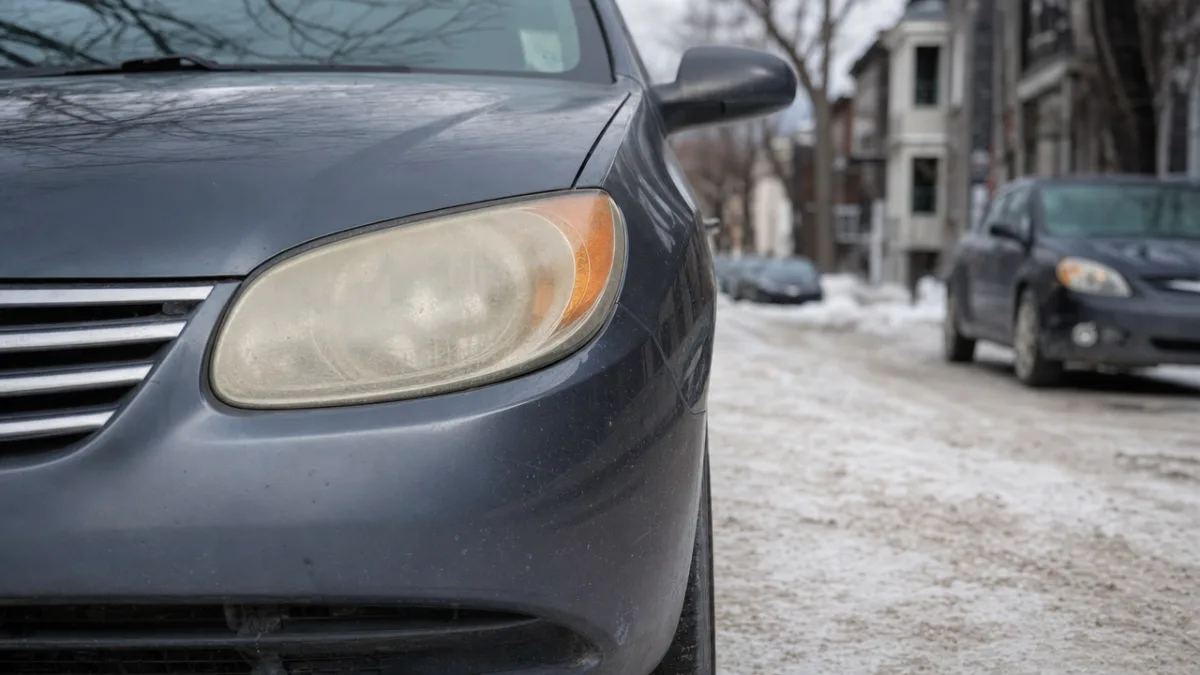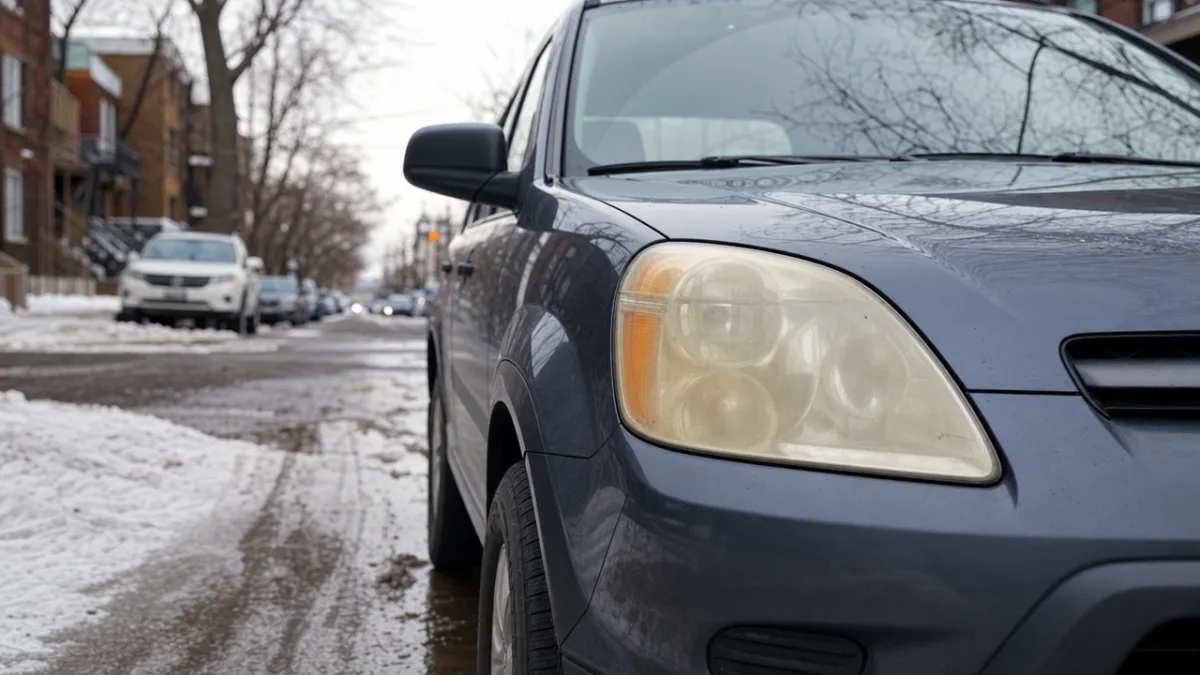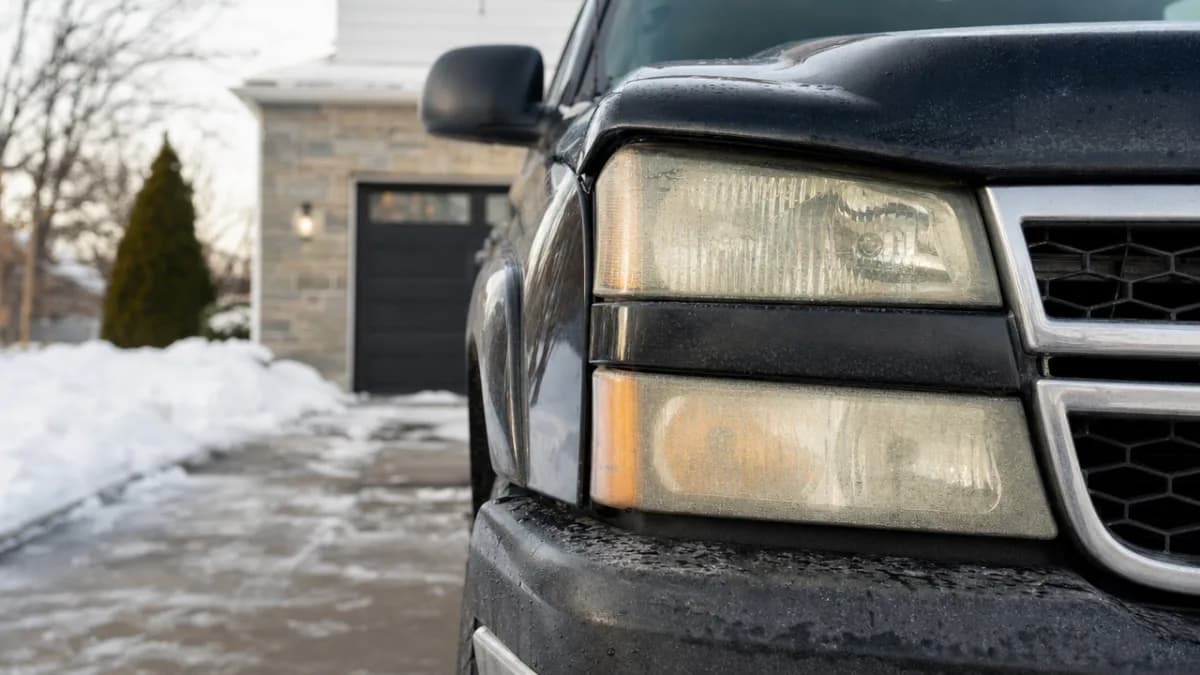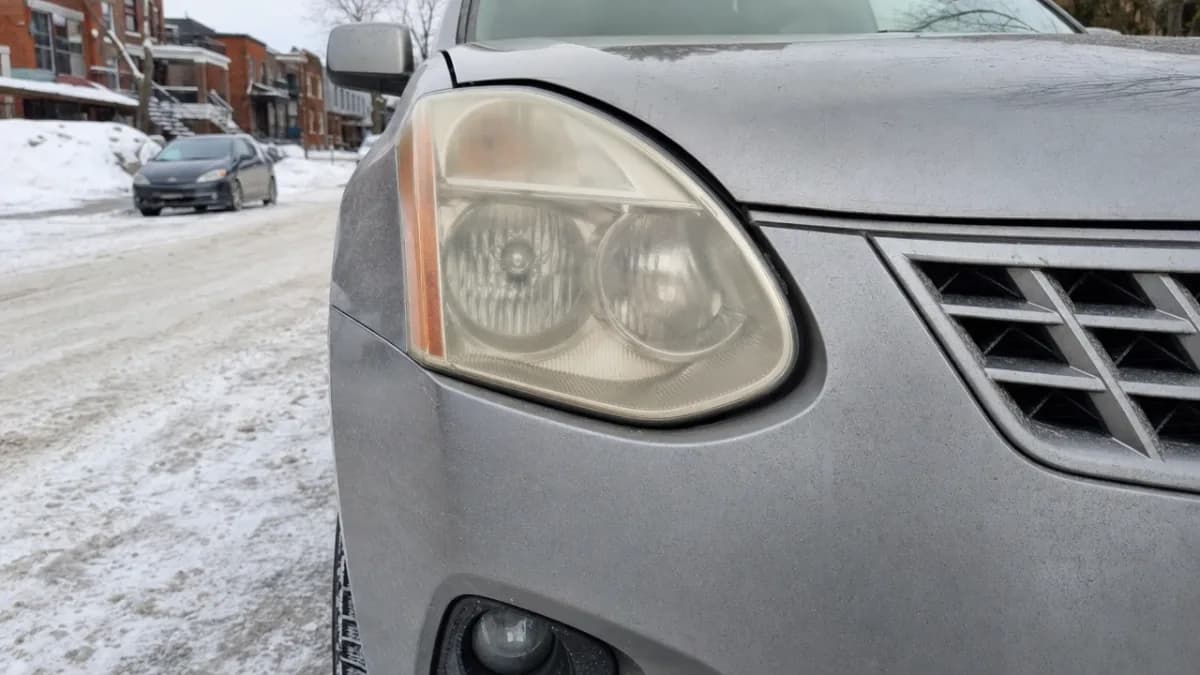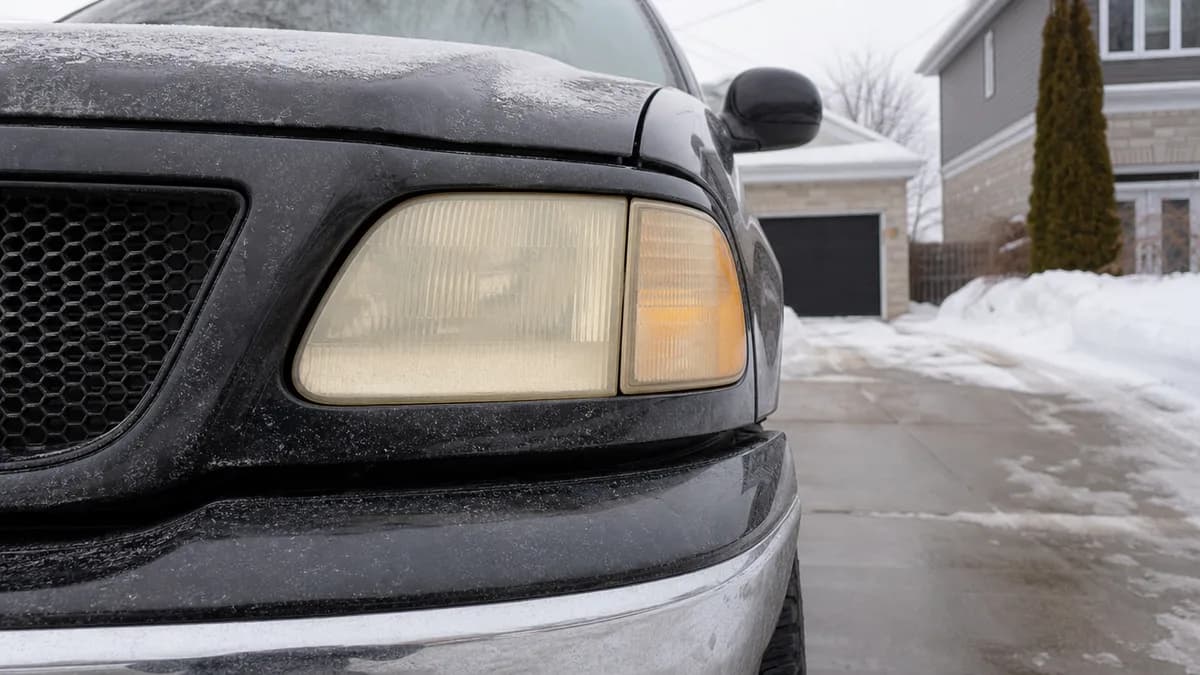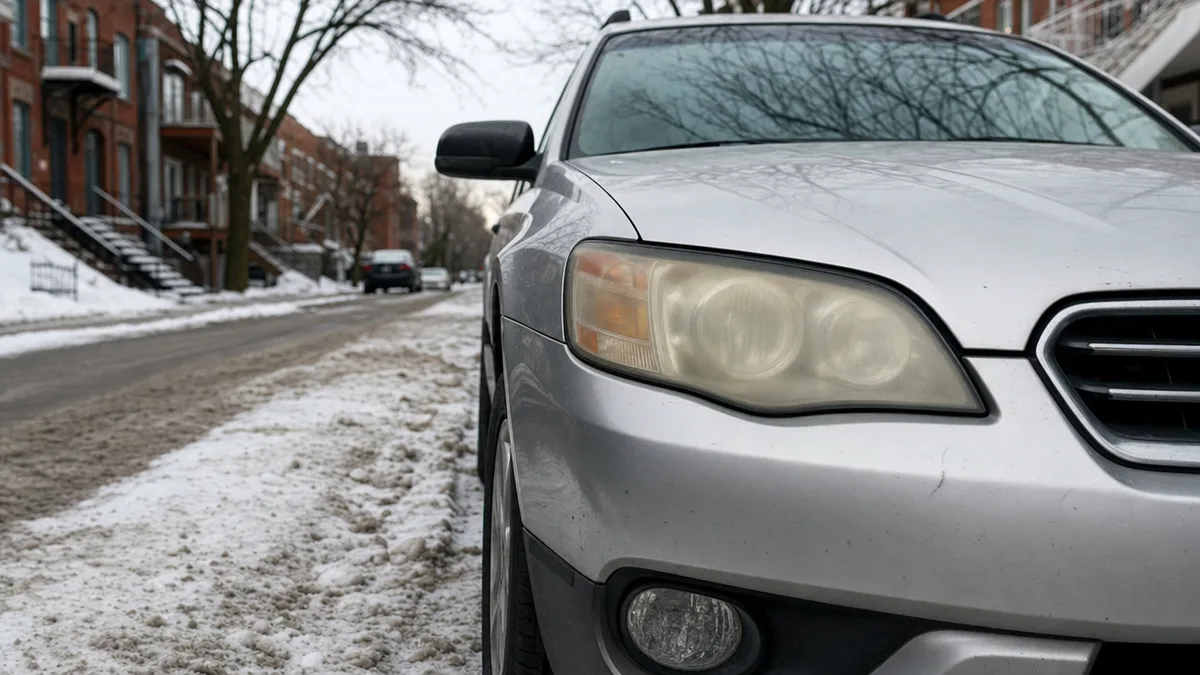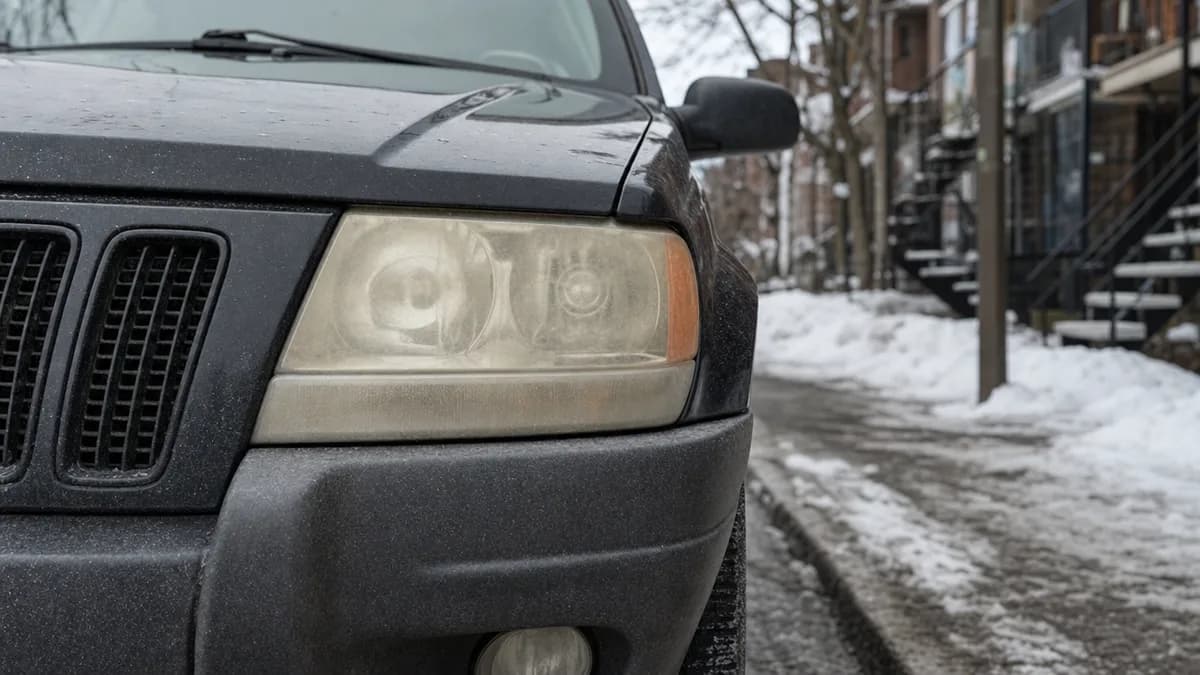
If you drive a Jeep Grand Cherokee or a Dodge RAM in Quebec, you've probably noticed that the headlights go yellow or milky long before the rest of the vehicle looks worn. It's a common pattern on the road, and there are real reasons for it. These two models share several factors that make them more prone to lens oxidation. Here's what's actually happening.
Large headlights exposed to everything
The Grand Cherokee and the RAM have one thing in common: their light housings are big. The larger the polycarbonate surface, the more UV exposure it gets, the more gravel it takes, and the more it deals with temperature swings and road salt. It's partly geometry, partly chemistry.
As we cover in our article on SUVs and trucks whose headlights suffer more, the height of these vehicles puts them in a tougher spot than a regular sedan. Headlights mounted that high catch direct sun late in the day, especially on the highway. That's not a small detail.
The RAM, which many people use as a work truck, also spends long hours in the sun on job sites, open parking lots, and gravel roads where debris kicks up constantly. Each tiny scratch in the factory coating is an entry point for oxidation.
Factory coating: not permanent on these models
Manufacturers apply a protective varnish to polycarbonate lenses at the factory. That varnish is your first line of defense against UV rays, but it doesn't last forever, and how long it holds up varies by brand and production year.
On several generations of Grand Cherokee (particularly the WK2 models from 2011 to 2021) and on recent RAM 1500 and 2500 trucks, this coating tends to break down around year three or four. It's not a manufacturing defect in the strict sense, but it's a pattern we see consistently in the field. Once the varnish starts cracking or peeling, oxidation moves in fast underneath.
You usually spot the problem first at the top corners of the headlight, where the sun hits most directly. Then it spreads. Within two seasons, a headlight that looked fine can become seriously cloudy.
Quebec winters: an accelerator for wear
The climate matters here. Repeated freeze-thaw cycles in Quebec create micro-contractions in the polycarbonate. Road salt attacks the lens surface every time you drive in winter. Accumulated grime acts like light sandpaper, gradually scratching the lens.
Then spring arrives with strong sunshine. That shift from cold to intense UV is especially hard on headlights whose varnish is already compromised. If you notice every year that your headlights seem to have aged all at once by May, that's the mechanism right there.
Can restoration actually work on these models?
Yes, it does. Professional restoration works on the Grand Cherokee and the RAM, and it delivers solid results in almost every case. The lens itself is rarely damaged deep down. It's the surface that's oxidized, and that's the layer we remove through progressive sanding before applying a new sealant.
The difference is noticeable. Headlights that seemed beyond saving get back to near-factory clarity. On the safety side, the improvement is real: as the data shows in our article on night driving with cloudy headlights, opacity cuts your beam reach significantly.
To hold the results over time, proper protection after restoration matters. You can look at your options in our comparison of wax, sealant, and ceramic coatings for headlights.
No need to travel to get it done
With Phares Auto Mobile, we come to you. Whether you're at home, at the office, or on a job site, you don't have to lose half a day at a shop. The restoration happens on-site in about an hour, and you don't have to move your vehicle.
For a RAM owner with a full schedule, that's a real advantage. For the Grand Cherokee sitting in your driveway, it's even simpler.
If your headlights have started to yellow, don't let them go further. The longer you wait, the more work the restoration requires. Book an appointment on pharesautomobile.ca and we'll take care of it right where you are.