Why the CR-V is especially prone to this problem
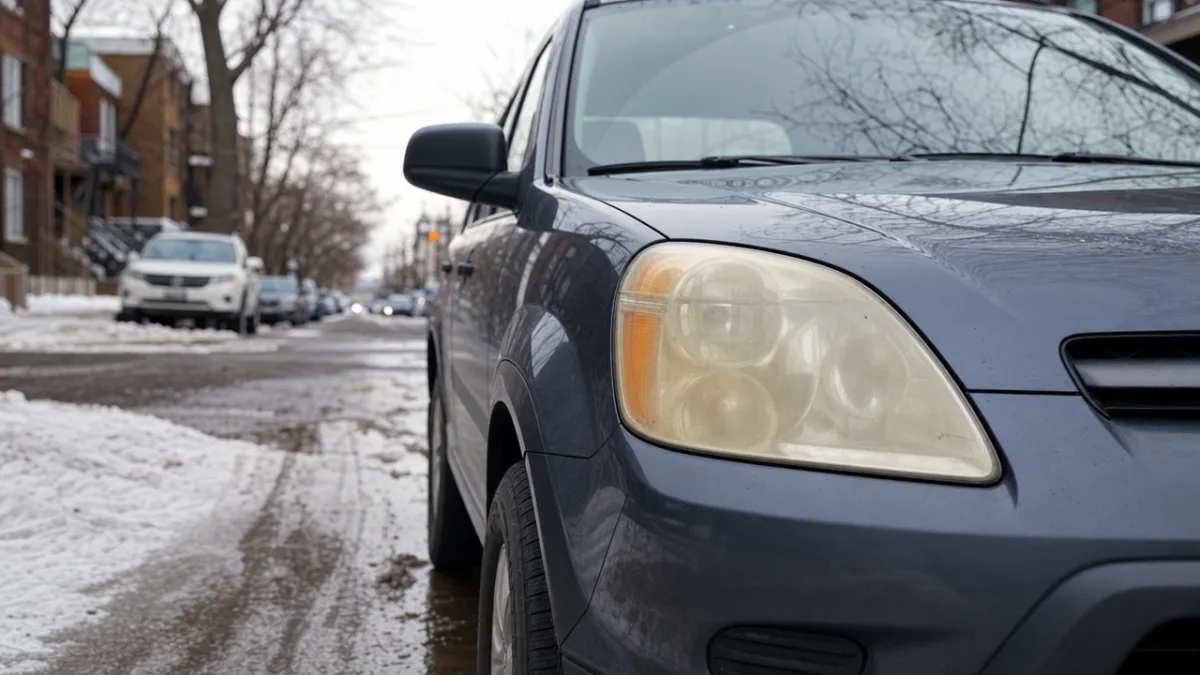
The Honda CR-V sells well in Quebec for good reason: it's reliable, spacious, and fuel-efficient. But there's one thing almost every owner notices around the fourth or fifth year: the headlights turn yellow. It doesn't happen overnight, but it's noticeable enough to make you wonder if something's wrong.
It's perfectly normal, unfortunately. The main culprit is that Honda uses polycarbonate for its headlight housings, just like pretty much every automaker has since the 1990s. This plastic is lightweight and shock-resistant, but it's vulnerable to UV rays. Honda applies a protective coating at the factory, but that coating doesn't last forever, especially not in conditions like ours.
What makes things worse in Quebec is the combination we all know too well: long winters with heavy road salt, intense spring and summer sun, and abrasive road conditions that constantly bombard headlights with debris. A CR-V, sitting high up as an SUV, gets pelted more than most sedans. To dig deeper into how this works, check out our article on why polycarbonate headlights yellow faster than glass.
What you'll actually see on your CR-V
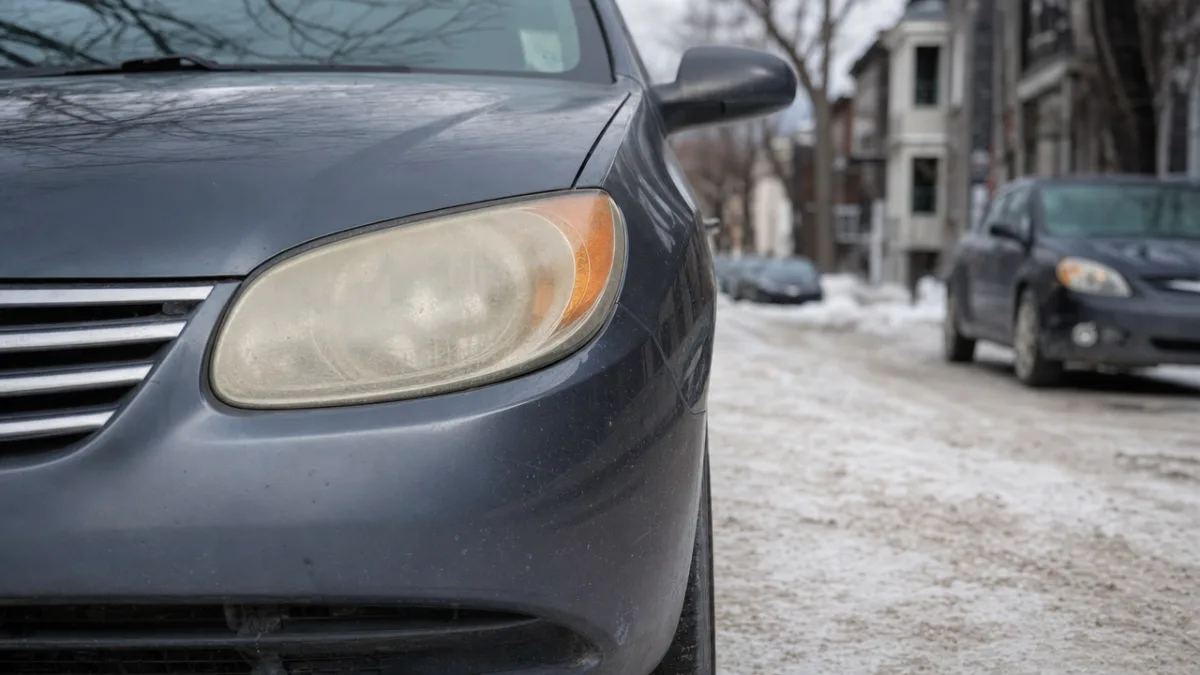
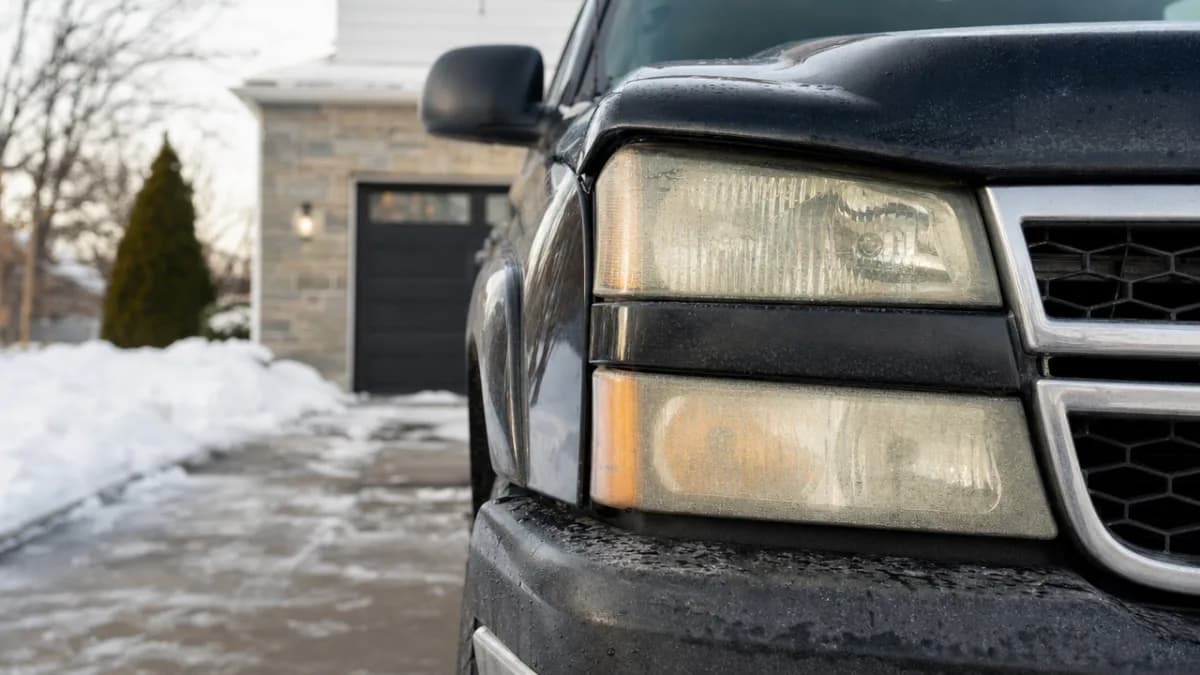
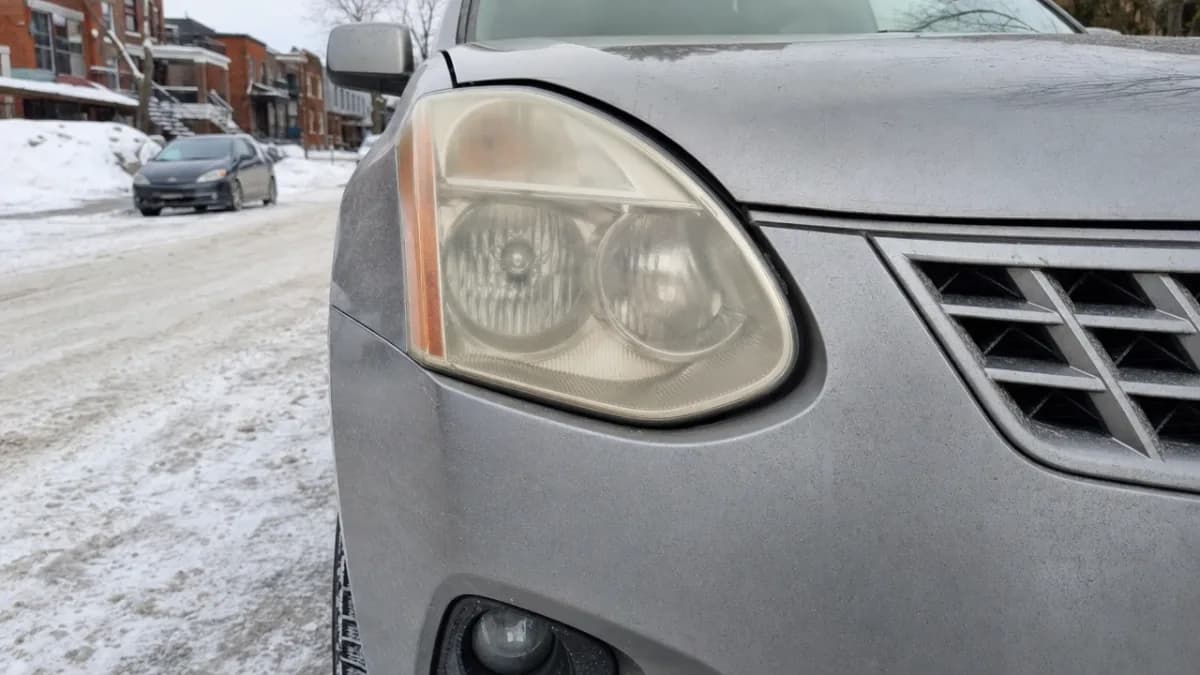
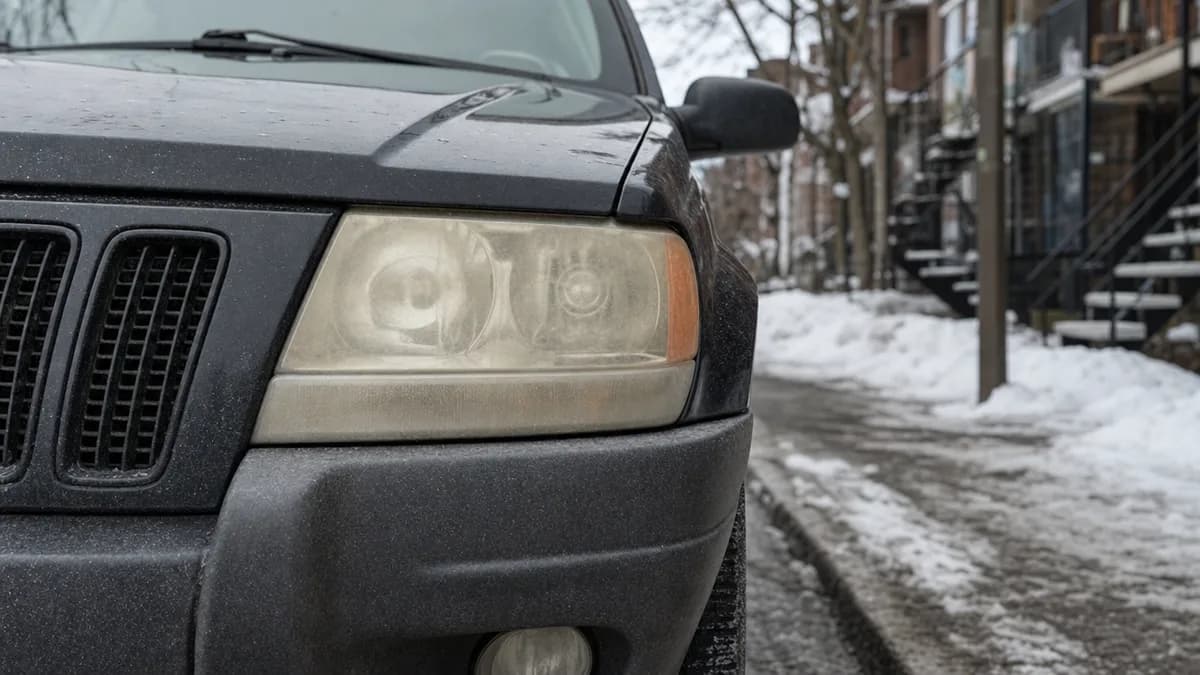
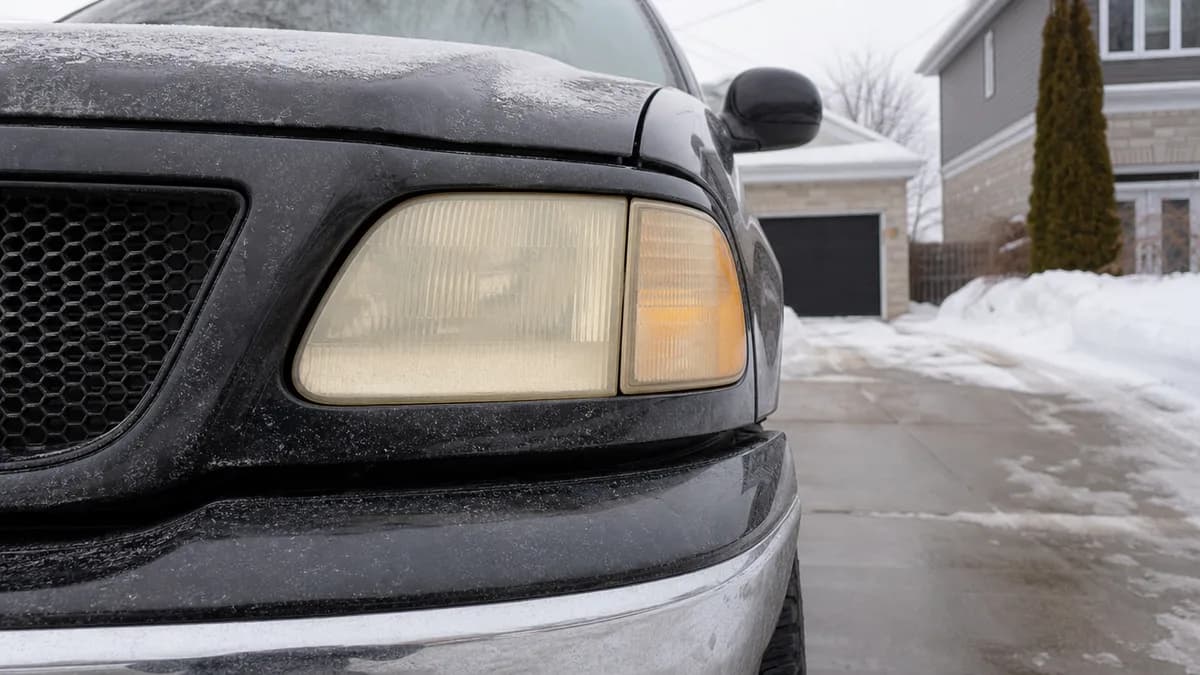
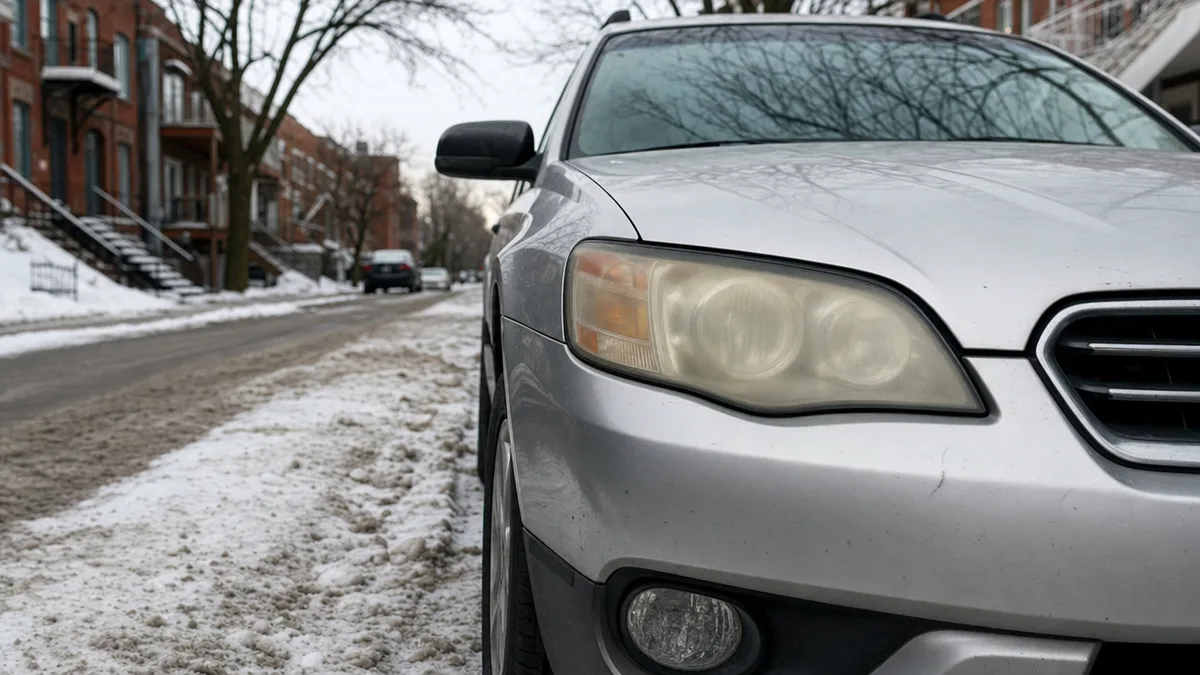
The cloudiness happens gradually. In the first few years, you might notice a light yellowish tint, especially on the top part of the headlights where UV rays hit hardest. Over time it spreads: the plastic becomes less transparent, the light beam weakens, and the whole front end of your car starts looking tired.
Some CR-V model years seem more susceptible than others. Vehicles built between 2012 and 2016 come up in conversation a lot, but newer versions aren't immune either. Factory coating, regardless of year, follows the same chemistry.
If you're not sure whether your headlights need work, there are five clear signs to watch for that can help you decide if it's time to act.
Replace or restore: what makes sense for a CR-V
When a mechanic suggests replacing your headlights, they're not entirely wrong. But for most CR-V owners, restoration is the smarter financial call. A new replacement headlight for this model can run you $300 to $600 each, sometimes more depending on the generation and whether it's genuine Honda or aftermarket. Double that, and you're looking at a hefty bill.
Professional restoration costs a fraction of that, and when done right (progressive sanding, proper polishing, durable sealant), the results hold up for years. The key is the protection applied at the end. Basic polish without a sealant looks great for a few months, then yellows again. A solid UV-blocking coating changes everything.
What professional restoration actually involves
The process starts with assessing the headlight: how deep the oxidation goes, any scratches, the condition of the remaining coating. Then we sand in stages with increasingly fine abrasives to remove the damaged layer. Polishing comes next to restore clarity, then we apply a sealant or coating that shields the polycarbonate from UV.
On a well-maintained CR-V, restoration takes between one and one-and-a-half hours for both headlights. With a mobile service like Phares Auto Mobile, we come to you, whether that's your home or your office. No need to drive anywhere or drop your car off.
After restoration: keeping your headlights clear longer
Restoration fixes the immediate problem, but a few habits will slow down the next decline. Parking in shade or a garage when possible makes a real difference in how long the sealant lasts. Regular washing without aggressive brushing also helps protect the coating from wear.
Some owners add a PPF protective film on their headlights after restoration. It's an extra investment, but it can be worth it if you want to get the most out of the result over time.
For a seasonal headlight maintenance schedule built for Quebec's climate, check out our guide on how often to service your headlights in Quebec.
If you've got a CR-V with headlights starting to yellow, act before the oxidation digs in deep. Book an appointment at pharesautomobile.ca and we'll come to you.