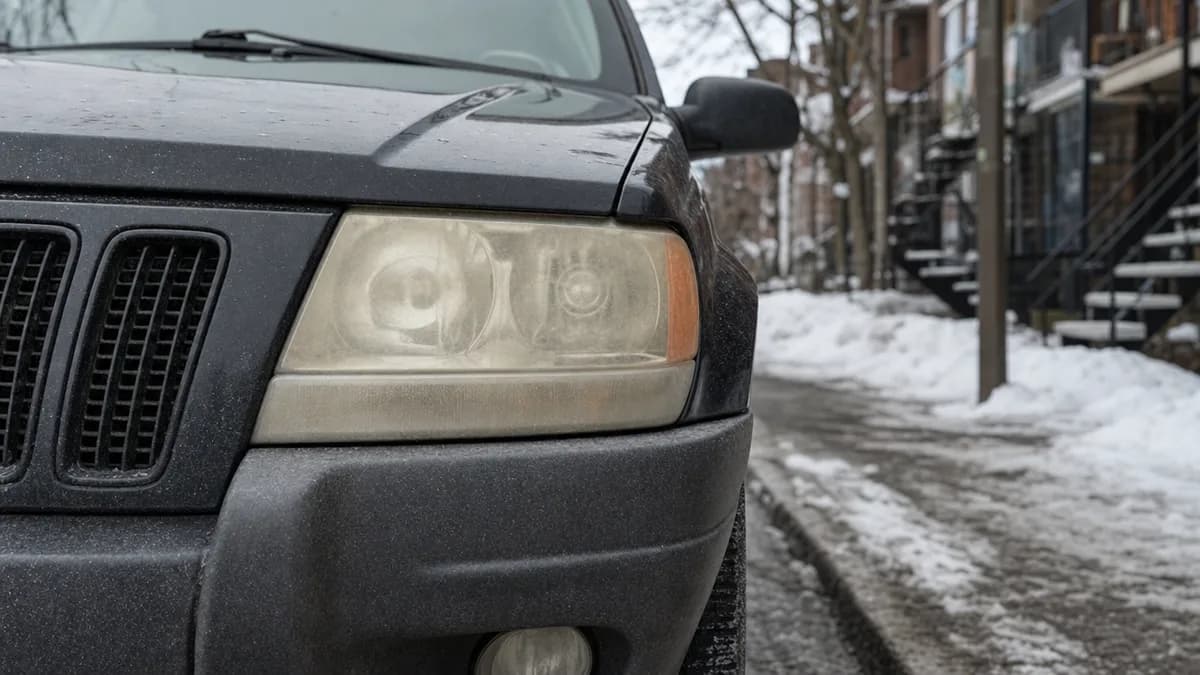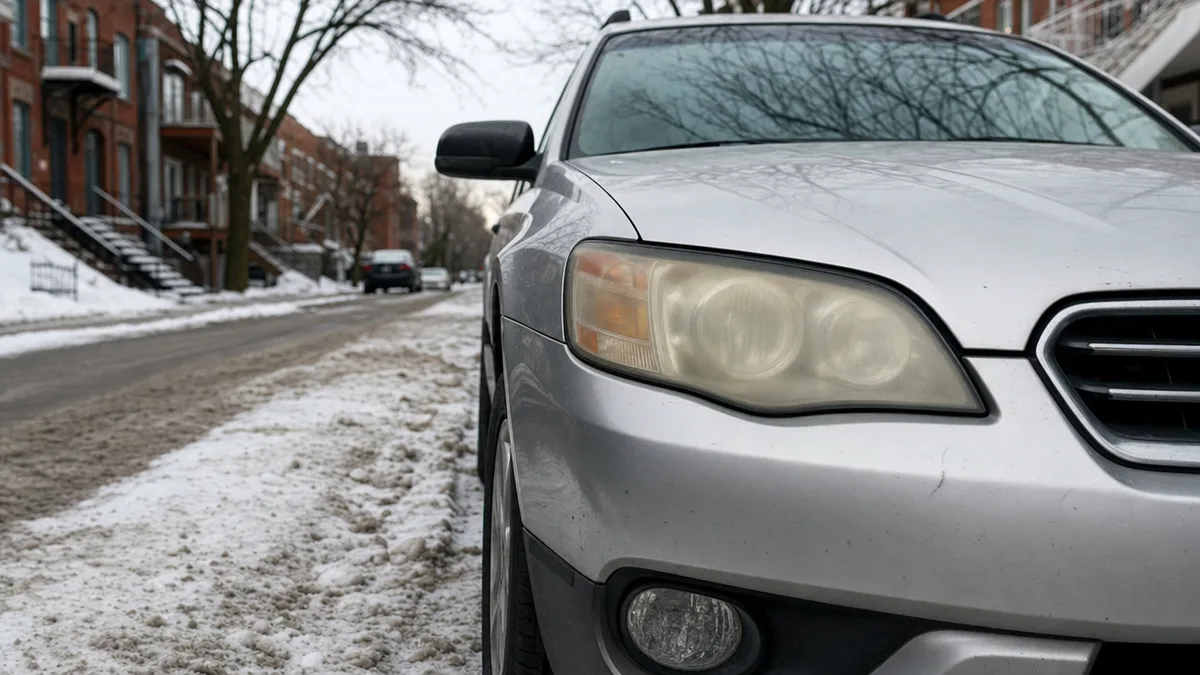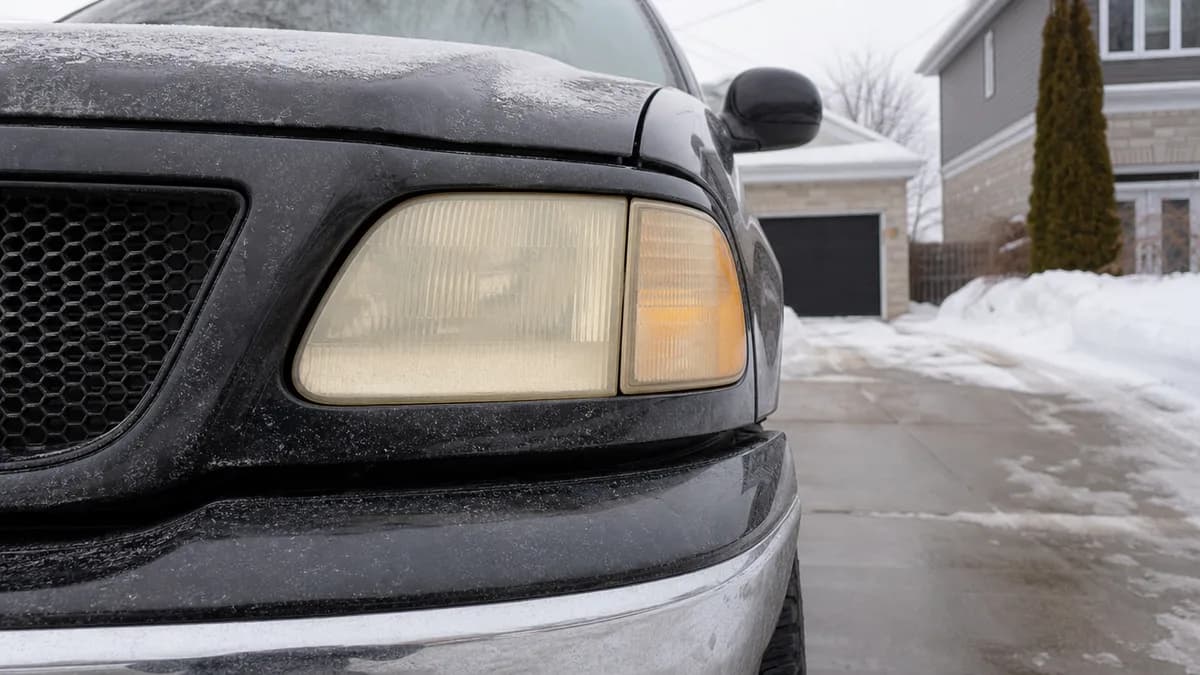
A popular truck with one specific weak spot
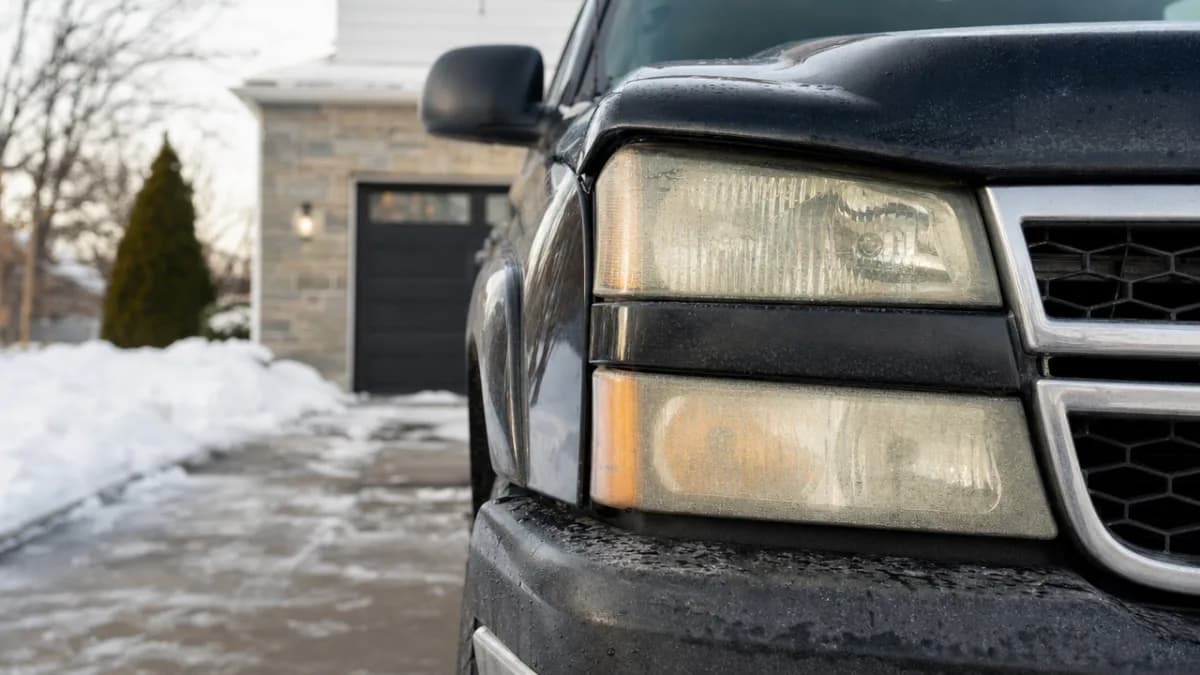
In Quebec, the Ford F-150 flies off the lot. You see them everywhere on the highways, in shopping mall parking lots, in suburban driveways. It's a solid truck, reliable and hard-working. But it has one vulnerability that a lot of owners discover too late: its headlights yellow fast. That's not a manufacturing defect. It's a combination of factors that hits this model harder than most.
If you're looking at your headlights after two or three winters wondering what went wrong, you're definitely not alone.
Large, exposed headlights: that's where it starts
The F-150 sits high on its wheels. That changes more than just your driving angle; it changes where your headlights sit relative to the elements. Truck and SUV headlights get hit by gravel spray, abrasive sand, and road slush differently than sedan lights. As we explain in our article on why SUVs and trucks suffer more headlight damage, a vehicle's height directly affects how much abrasion the headlight housing accumulates over the seasons.
On top of that, the F-150's headlights, especially on newer generations with their angular, widened design, have a massive surface area. The bigger the surface, the more material exposed to UV, salt, and moisture. It's that straightforward.
Polycarbonate and Quebec sun: not always a winning combo
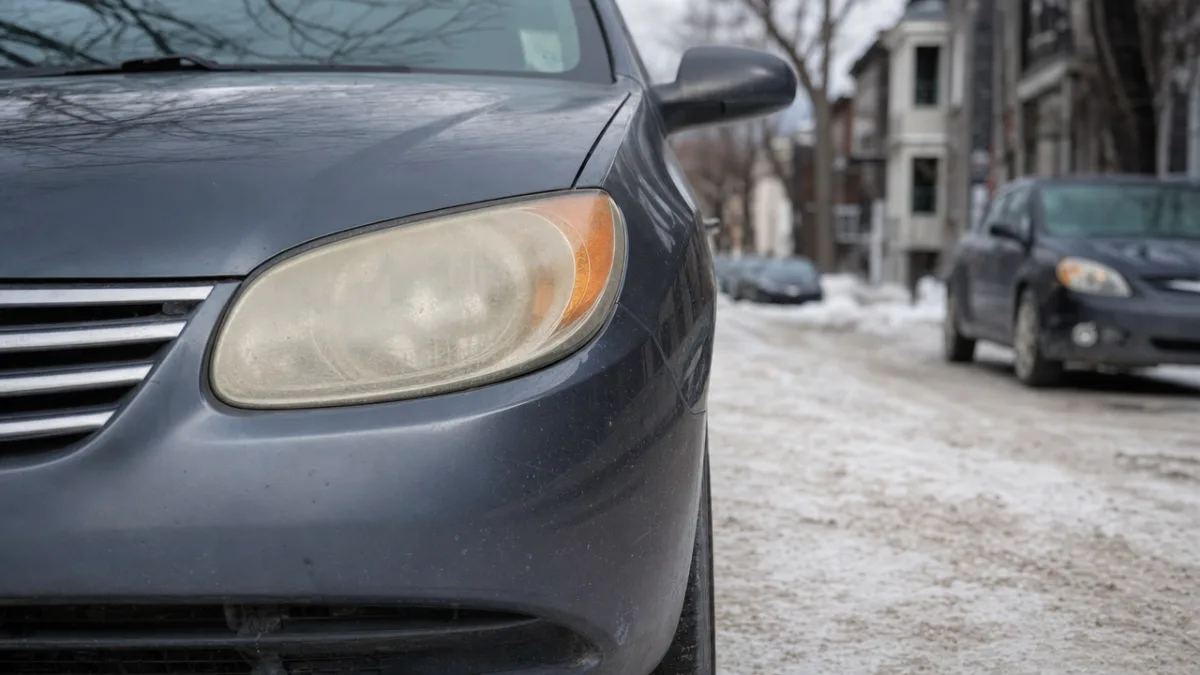
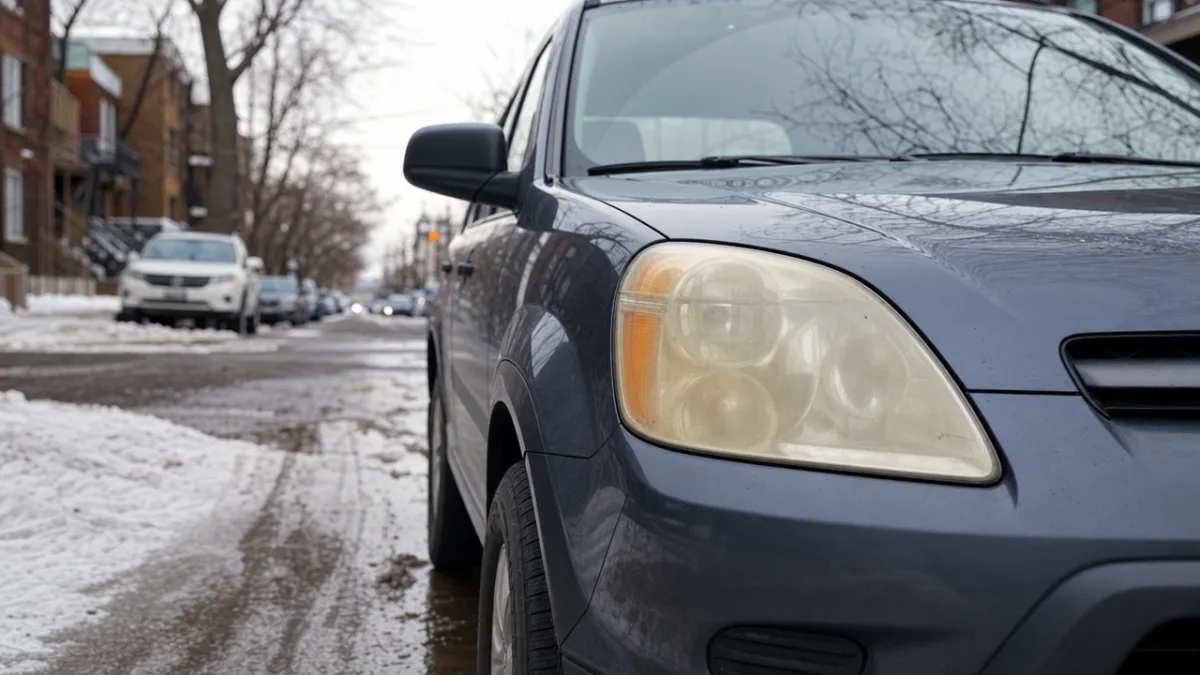
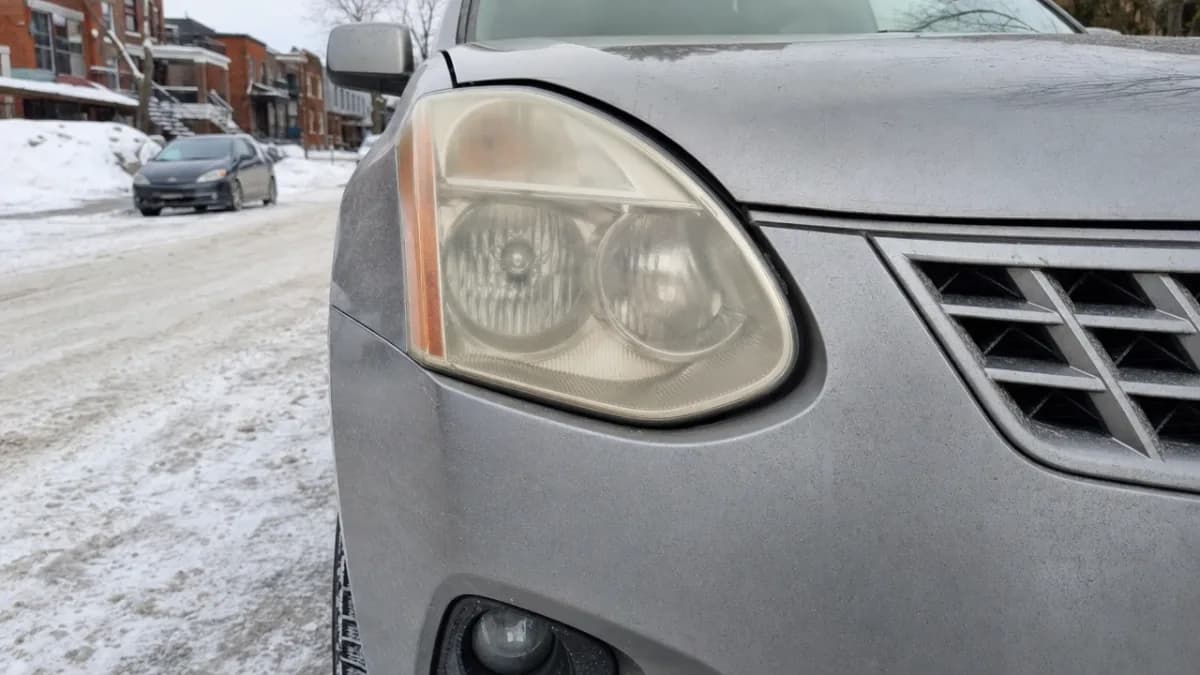
Like virtually every modern vehicle, the F-150 uses polycarbonate headlights instead of glass. Polycarbonate is lightweight and impact-resistant, which is why manufacturers went with it. But it has one downside: it reacts to UV rays. Over time, the factory protective coating breaks down, and that's when the yellowing takes hold.
Quebec has long, gray winters, sure, but our summers pack serious solar punch. A truck parked outside all day in July takes a real beating. And if you're parking facing south or west in the afternoon, your headlights are getting hit harder than you'd think.
Road salt makes things worse in winter. It doesn't directly yellow the headlights, but it attacks the polycarbonate surface, creates micro-scratches, and makes the lens more vulnerable to UV damage the following summer. It's a cycle that compounds season after season. Road salt does real damage to your headlights, and the F-150, often used year-round, gets constant exposure.
Does how you use the truck matter?
Absolutely, and it's often overlooked. An F-150 that works job sites, rolls on gravel roads, or regularly tows a trailer will rack up headlight damage way faster than a truck used mainly for grocery runs. Gravel spray creates impacts and micro-cracks in the housing, and those imperfections accelerate degradation.
Same story if your truck sits outside 365 days a year. Summer sun and winter freeze alternate relentlessly, and the headlight surface eventually cracks, dulls, and yellows faster than it would in a garage.
What you can actually do about it
Good news: yellowed F-150 headlights restore really well. Polycarbonate responds well to professional sanding and polishing, and the results show up right away. The real key is what comes after restoration: a solid protective sealant that slows the yellowing from coming back. Without it, the headlights will start degrading again within months.
Also keep in mind that the longer you wait, the deeper the damage goes. Slightly yellowed headlights need a quick restoration. Very cloudy headlights with cracks take more work, and in some extreme cases you're getting close to the point of no return. To figure out where your headlights stand, get them evaluated before deciding on next steps. 5 signs it's time to restore your headlights can help you assess the situation.
On the practical side, mobile service is a real advantage for F-150 owners. No need to take time off work or haul your truck to a shop. We come to you or your workplace and do the restoration on-site, usually in an hour or two.
Book an appointment at pharesautomobile.ca to get your headlights evaluated without leaving home.