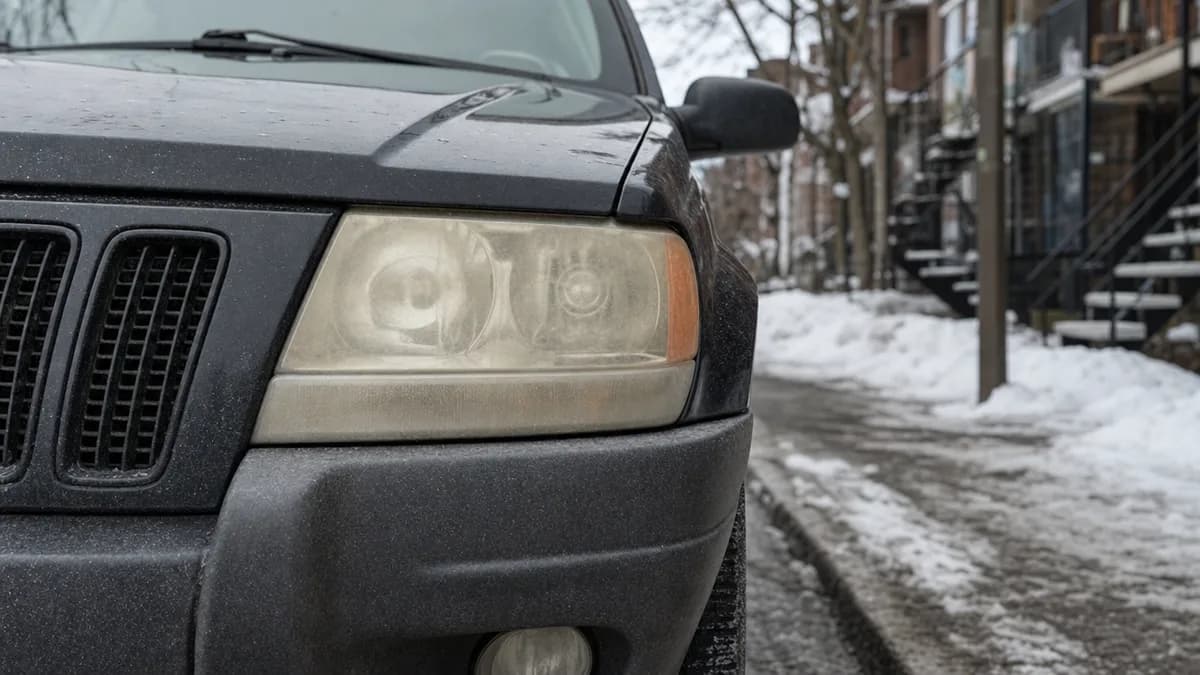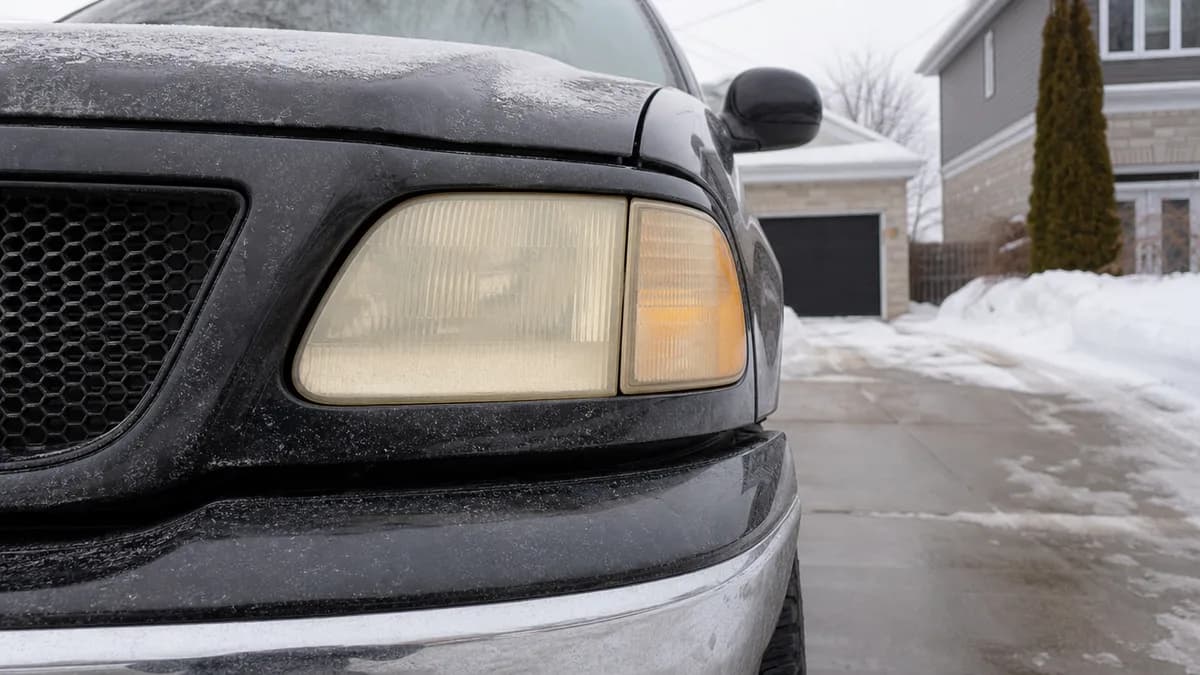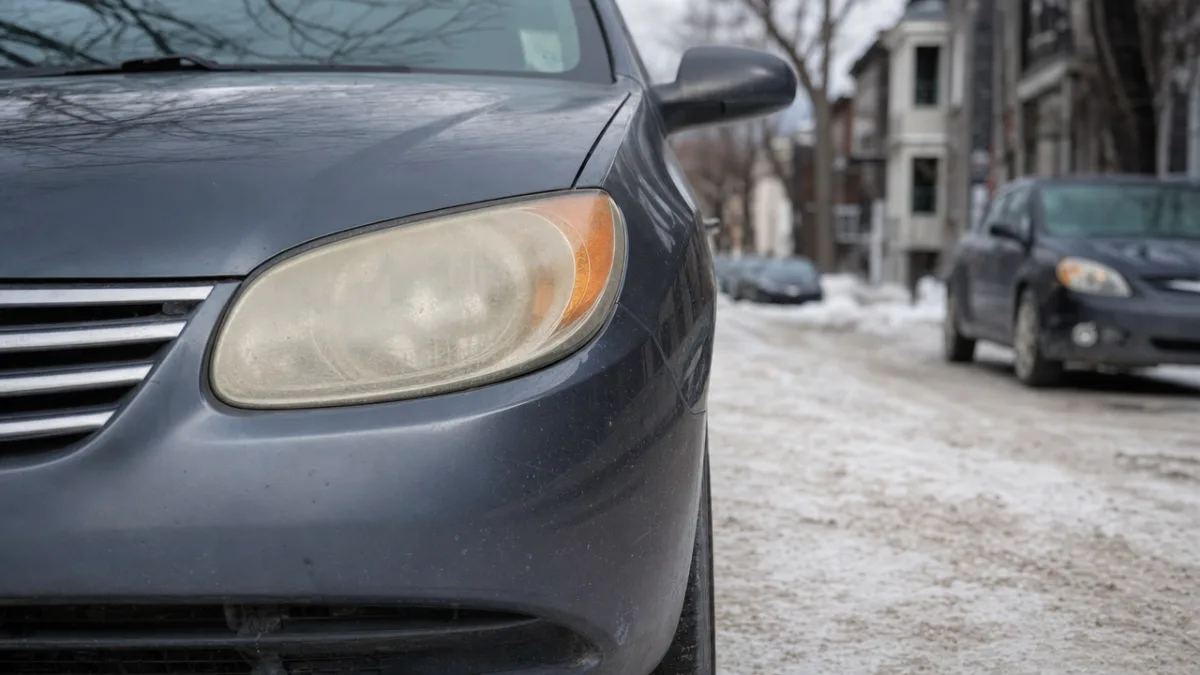
If you drive a Hyundai Elantra or Kia Forte, you've probably noticed it already: the headlights start to yellow pretty early. Not at 10 years, not even at 7. We're talking about 3 to 4 years of use, sometimes even less. For cars that sell well in Quebec, it's a problem a lot of owners catch way too late.
Why these two models specifically?
The Elantra and Forte target a price-conscious market. That means manufacturers make material choices to keep costs competitive. Headlights are often made from thinner polycarbonate with a UV coating applied at the factory that does the job at first, but it's no match for Quebec conditions.
These compact sedans also have a low grille and hood, which puts the headlights right in the path of gravel spray, road salt, and slush. SUV headlights sit higher and take fewer direct hits at bumper level. The Elantra and Forte take it all head-on.
The role of Quebec's climate
It's no coincidence that yellowing happens faster here than in California. The freeze-thaw cycle attacks polycarbonate differently than dry heat does. In winter, the UV coating contracts. In spring, it expands. Repeat that a few seasons and micro-cracks start to form. Once the coating fractures, UV rays penetrate right into the plastic and degrade it from the inside.
Road salt does a continuous sandblasting job all winter long. It's a natural abrasive that slowly erodes the headlight surface on every drive. For more on how this works, the article about Quebec road salt and its effects on your headlights covers the chemistry and mechanics in detail.
Warning signs to watch for
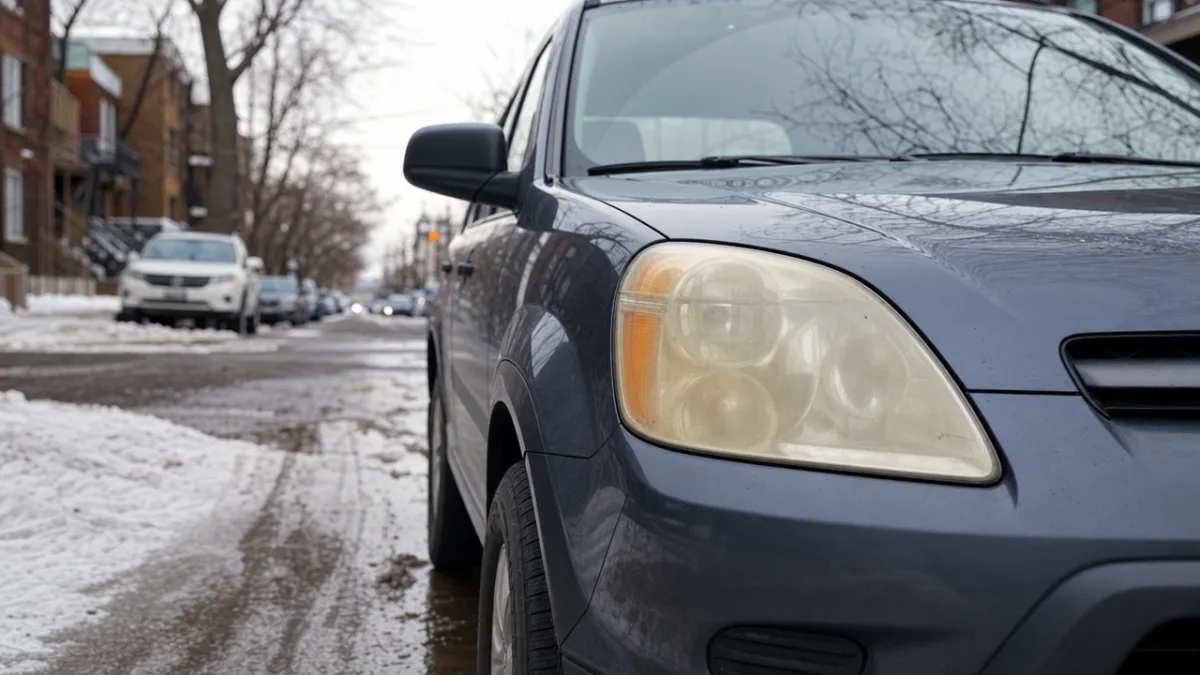
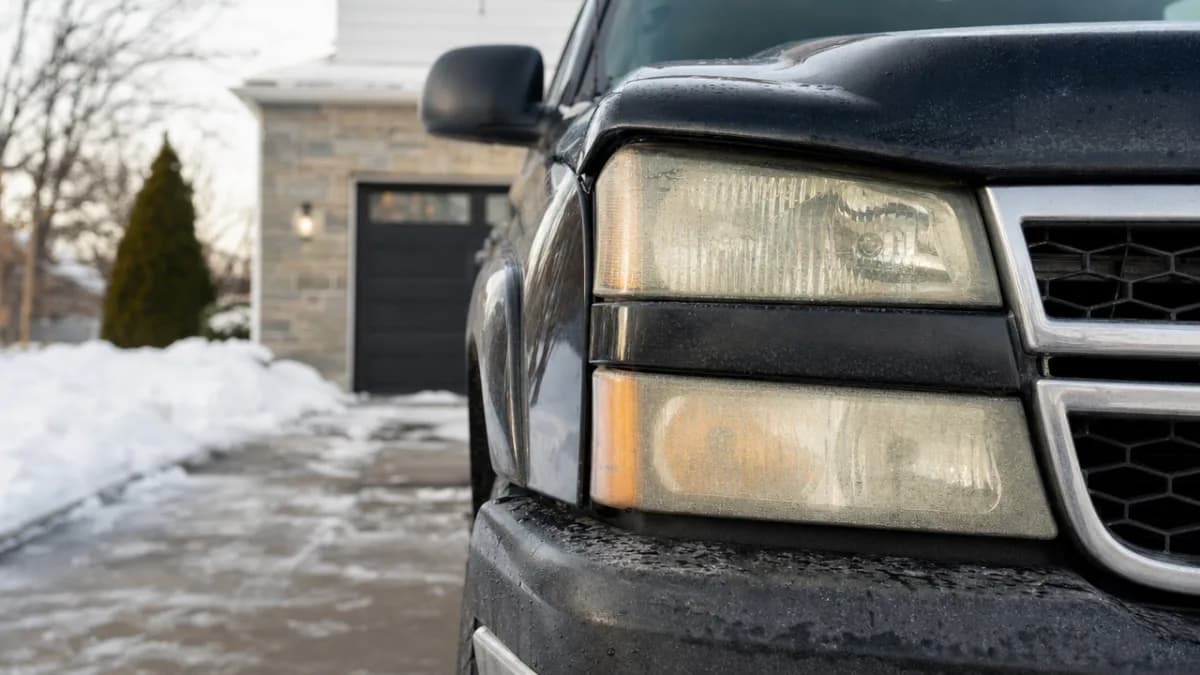
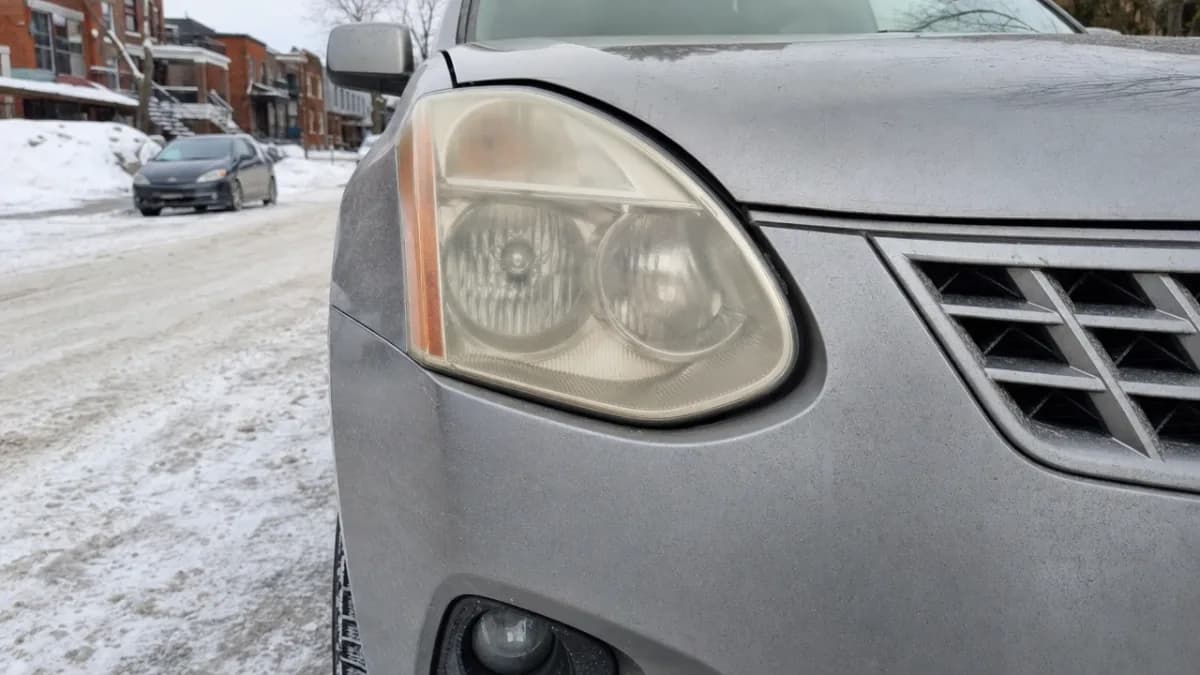
Yellowing on an Elantra or Forte usually follows the same pattern. At first, it's a slight white or grayish haze around the edge of the headlight, especially on top where the sun hits hardest. Then the tint shifts to pale yellow, then to a darker yellow that clearly blocks light. At that point, you start having trouble seeing the road properly at night.
If that sounds like your situation, you're not alone. Several of the 5 signs it's time to get your headlights restored show up around 3-4 years on these models, often before the owner even expects it.
Can we do anything about it?
Yes. Polycarbonate, even when yellowed, can be restored in the vast majority of cases. Professional restoration involves progressive sanding to remove the degraded layer, polishing to bring back clarity, then a fresh UV sealant to protect the surface.
The result on an Elantra or Forte in decent overall condition is usually really solid. The headlights regain near-original clarity, and the difference at night is genuinely noticeable. Where people sometimes go wrong is waiting too long. The further the degradation goes, the more work it takes, and in severe cases the results won't be as dramatic.
One thing to keep in mind: after restoration, the protective sealant is almost as important as the restoration itself. Without proper UV protection, the polycarbonate starts to degrade again pretty quickly. A good coating can add several years to how long your results last.
What it costs vs. what it saves
Replacing a new pair of headlights on an Elantra or Forte can run you between $400 and $900 depending on the year and trim, not counting shop labor. Restoration typically costs a fraction of that, and it can be done without you going anywhere: the technician comes to your place or your office, and the work takes about an hour.
It's also worth thinking about if you're planning to sell your car. Clear headlights change how a vehicle looks overall and can influence a potential buyer's impression.
If you've got an Elantra or Forte with headlights that are starting to show wear, this is the kind of thing we handle quick and easy. Book an appointment at pharesautomobile.ca and we'll come to wherever works for you.