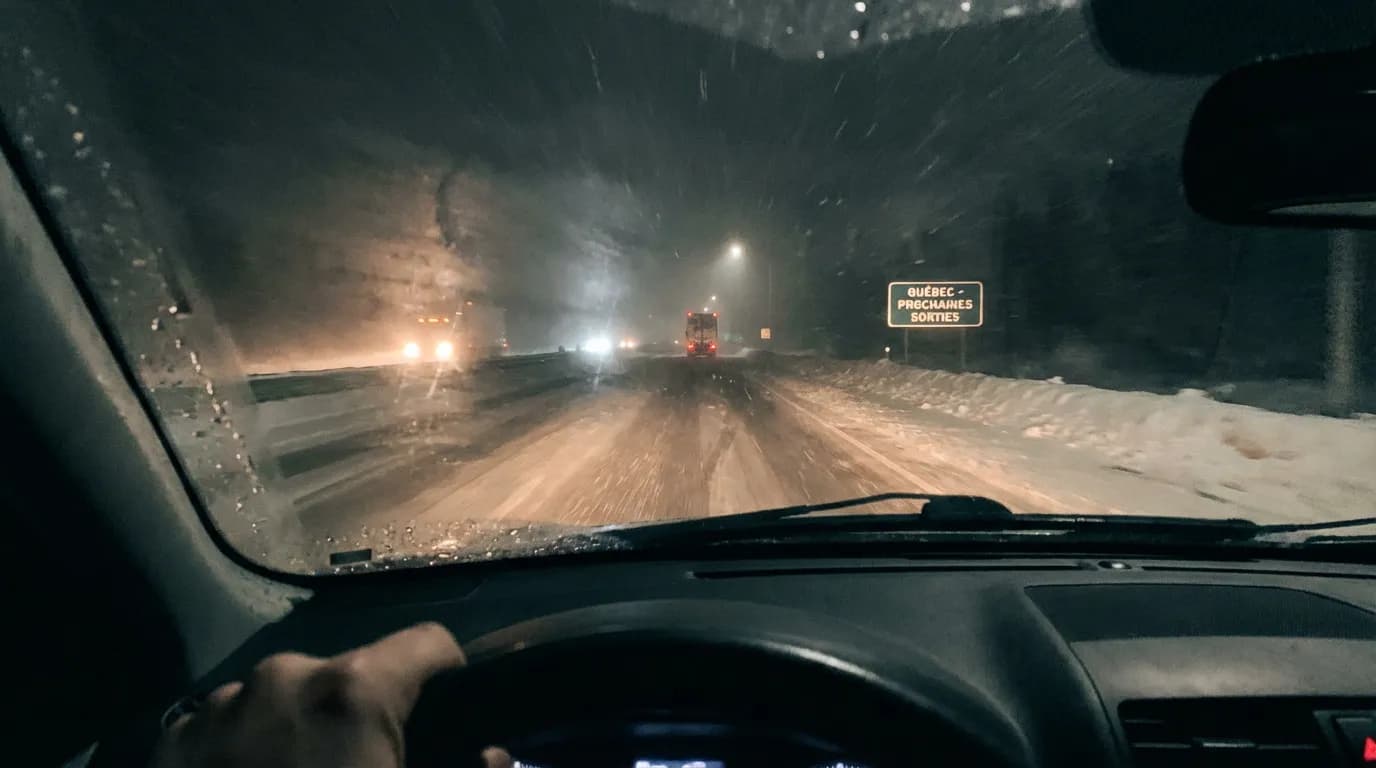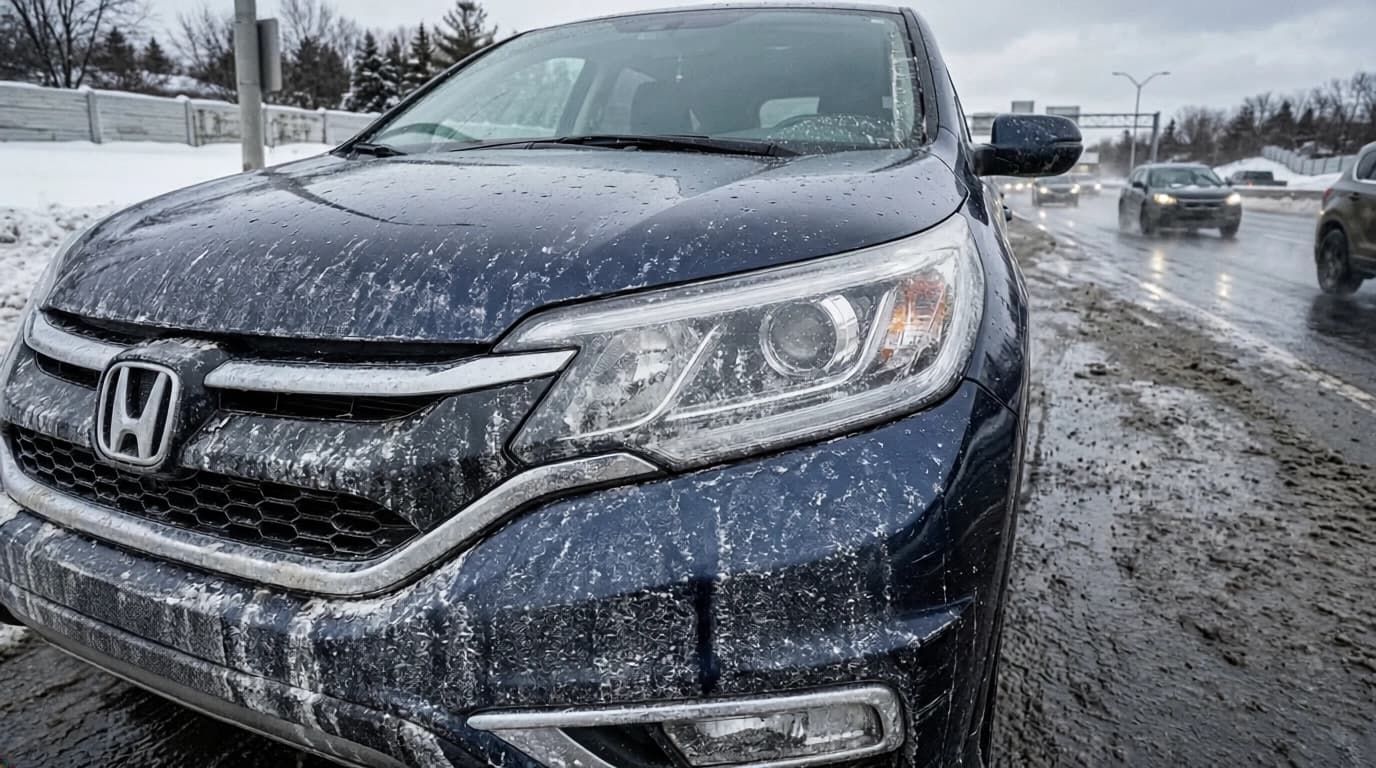
In Quebec, about 1.5 million tons of salt hit the roads every winter. Your car drives through that for five months straight. We spend a lot of time worrying about rust on the body and the undercarriage, but we rarely think about what salt does to the headlights.
What road salt actually does to your headlights
Road salt (sodium chloride and calcium chloride) is abrasive. When it gets sprayed onto your headlights by the wheels of cars ahead of you, it works like very fine sandpaper. You won't notice it after a single day, but it adds up over a full winter.
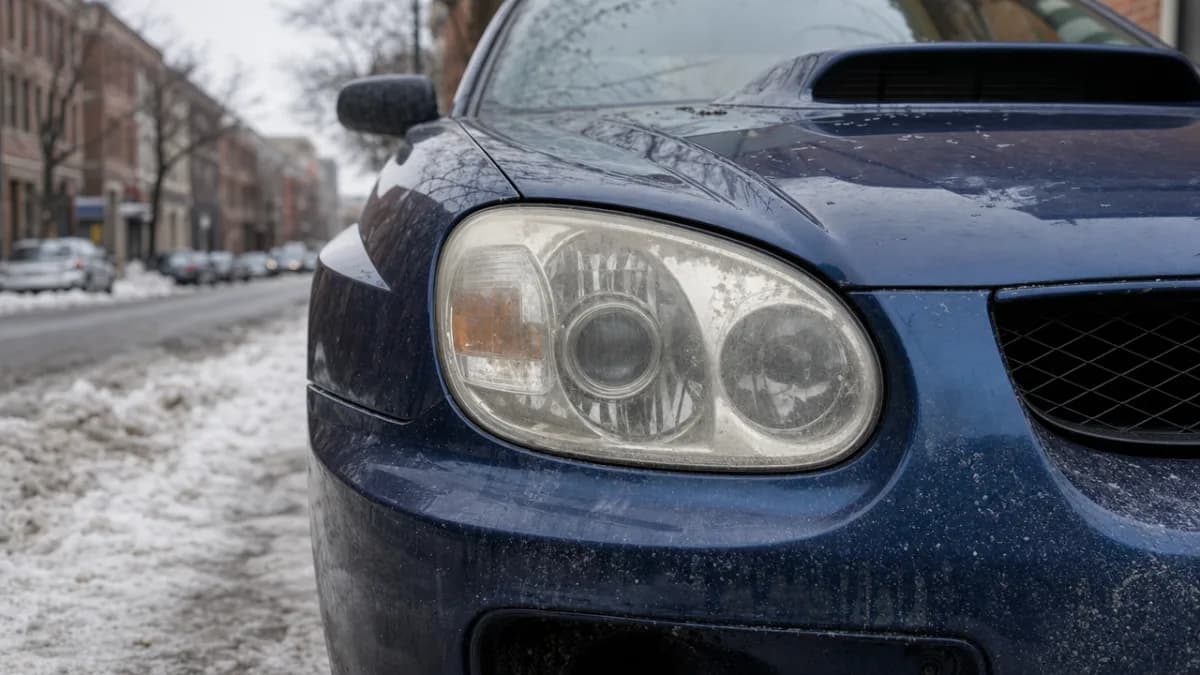
The salt wears away the UV-protective coating the manufacturer applied at the factory. Each winter removes a bit more of that barrier. Once it's gone, the polycarbonate sits directly under UV rays. The yellowing starts. We walk through the full oxidation process in our article about polycarbonate and headlight yellowing.
There's a chemical side to it too. Salt mixed with water produces a slightly corrosive saline solution that sits on your headlight surface and accelerates plastic breakdown. That whitish film you see at the end of winter? That's what it leaves behind.
Abrasives too: sand and gravel
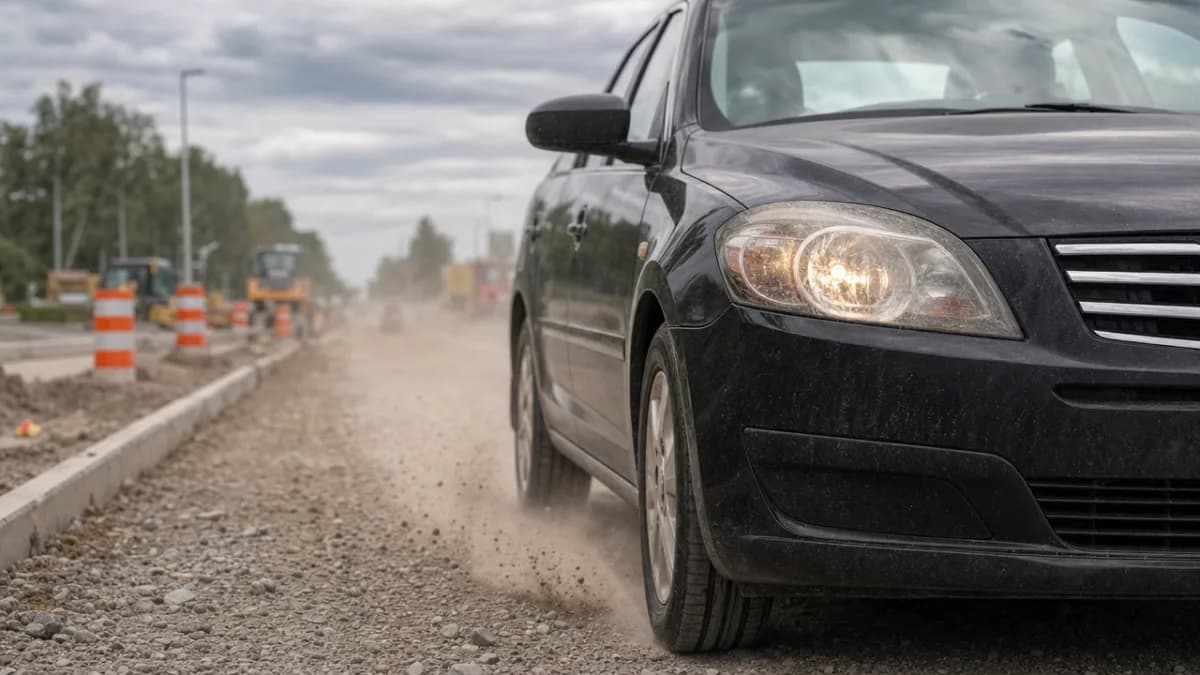
Salt rarely travels alone. Municipalities often mix in fine sand or gravel to improve traction, and those particles are even more abrasive than the salt itself. They create micro-scratches on the headlight surface, making the plastic more porous and more vulnerable to oxidation.
Add the rocks flying off the highway, gravel from parking lots, and general road debris, and your headlights take a real beating over a Quebec winter.
How to limit the damage
The first step is rinsing your headlights regularly during winter. Just a splash of clean water to clear off accumulated salt. A garden hose works, but so does a water bottle if that's what you have. The goal is to stop salt from drying and crusting on the surface for weeks at a time.
One thing to avoid: rubbing your headlights dry when they're coated in salt. The crystals will scratch the surface. Rinse first, then rub, and gently at that.
A ceramic coating applied before winter gives solid protection. It creates an extra barrier between the salt and the plastic. We go into detail on this in our article about ceramic coating for headlights.
The best time to get your headlights restored
Spring is the right time. Winter just wrapped up, the headlights took their beating, and you have the whole summer ahead to enjoy the results. Getting a restoration done in April or May is a logical follow-up to the cold season.
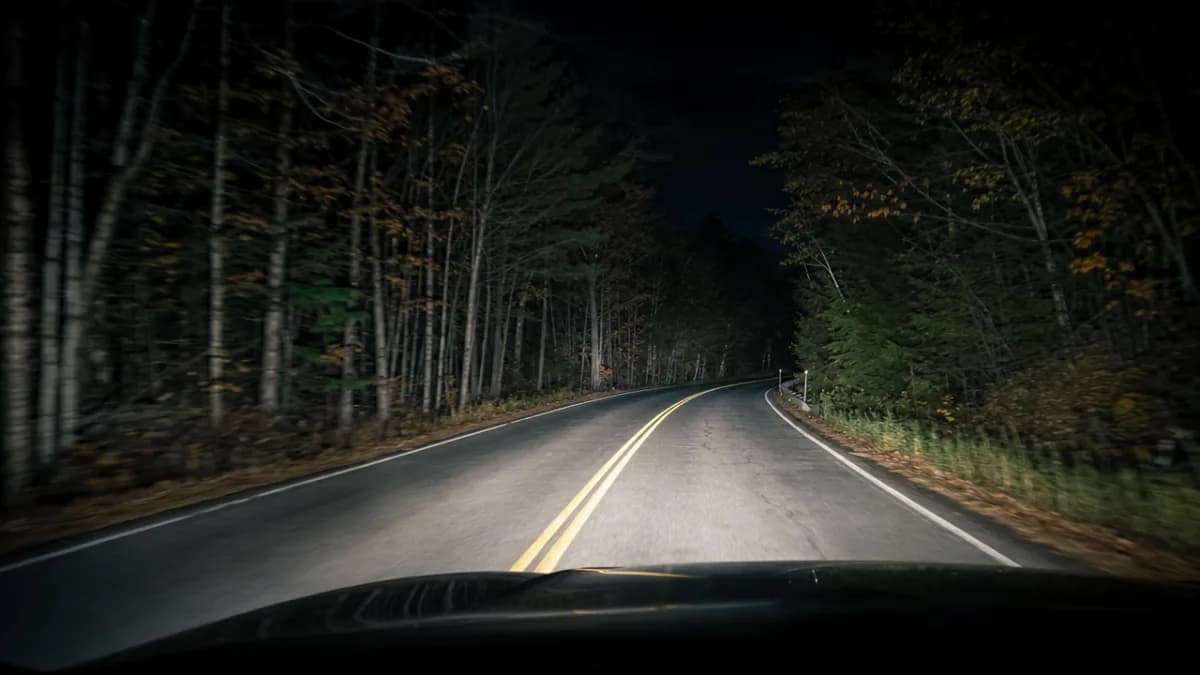
Fall works well too. You go into winter with clear headlights and a fresh protective coating, which means better visibility during the darkest months.
Book an appointment at pharesautomobile.ca for a restoration with ceramic protection included. We come to you in Montreal and on the South Shore.