Forest roads are a completely different ballgame than asphalt
If you regularly drive on gravel roads, country side roads, or unpaved forest routes in Quebec, you already know it: your vehicle takes way more of a beating than your neighbor's who just cruises Highway 20. Chipped windshield, pitted body panels, sandblasted undercarriage. The damage adds up fast. What you might not notice as much, though, is the direct impact on your headlights.
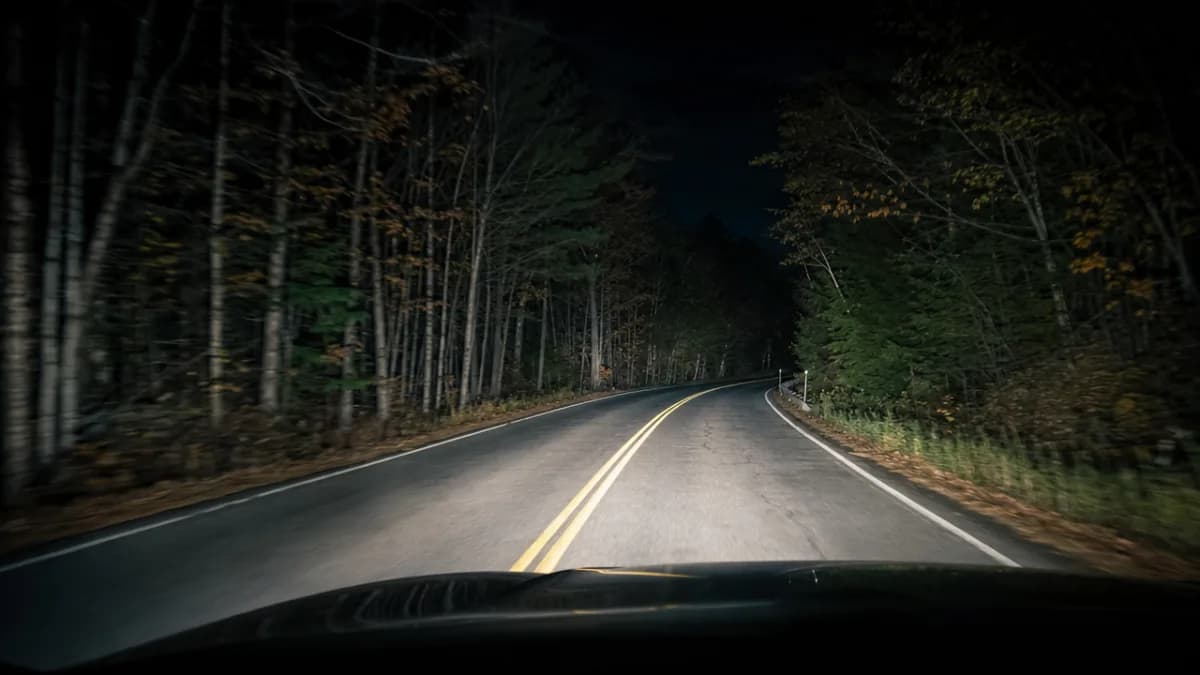
The conditions you find in Quebec's forest regions, gravel dust, tree sap, dense humidity, insects by the ton, create a particularly aggressive mix for the polycarbonate lens material. And that costs you later, when you're driving at night with lighting range cut in half.
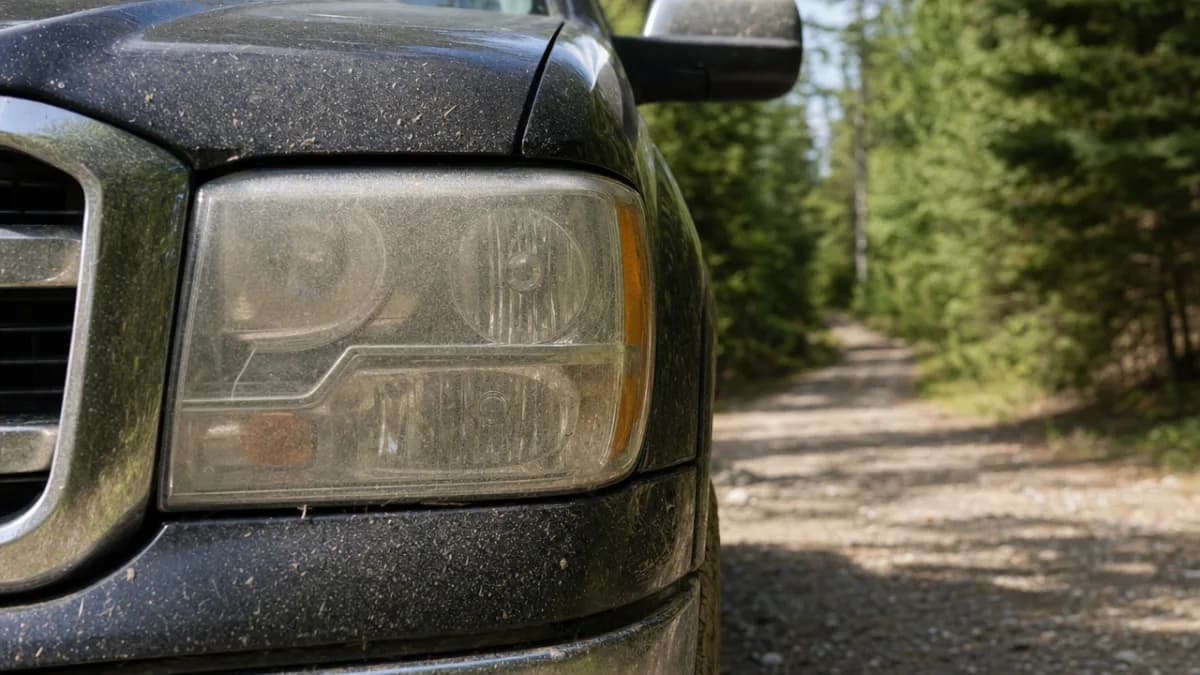
Gravel micro-scratches your headlight surface constantly
When you drive on a gravel road, little rocks bounce around all the time. Some hit the hood or fenders and you hear them. But the fine spray, the stone dust hanging in the air, settles everywhere, including on your headlights, and scratches them over and over again.
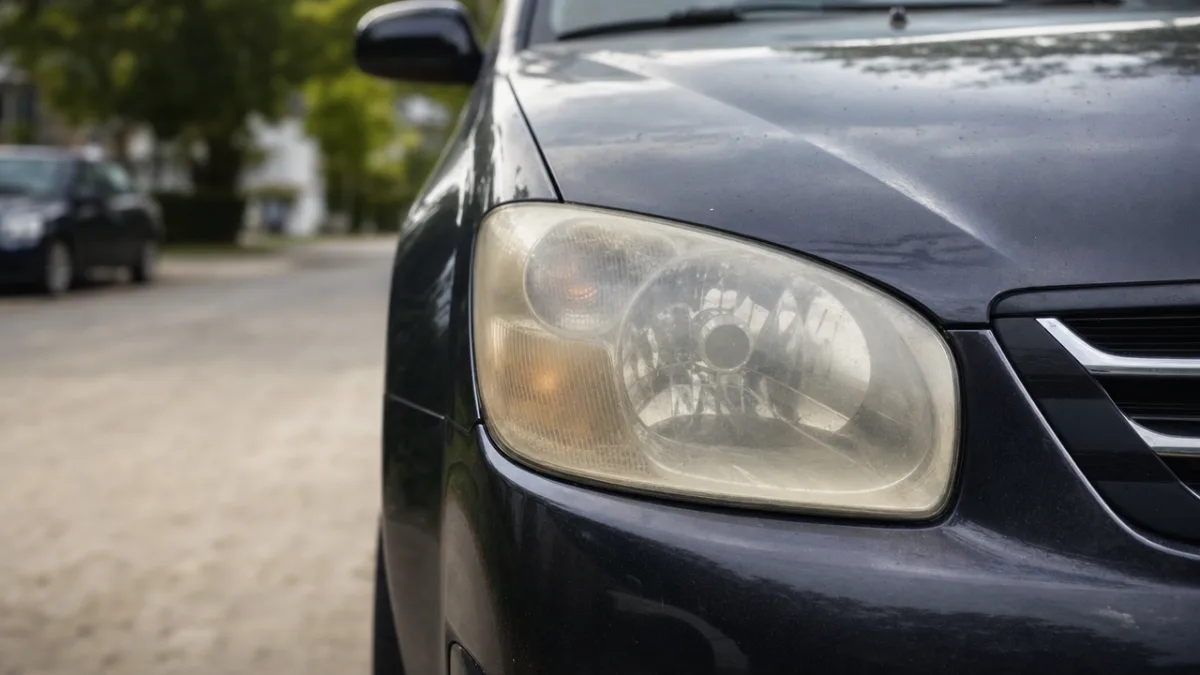
This micro-abrasion is different from what happens on the highway. On pavement, headlights take heavy UV damage and the protective coating degrades slowly. In the forest, degradation is more mechanical: the surface gets pitted, turns hazy, loses its shine well ahead of schedule. Even a three- or four-year-old vehicle can have cloudy headlights if the owner spends a lot of time on those kinds of roads.
That's why for this type of driver, waiting for obvious signs before taking action is a bad strategy. If you want to know when things get really concerning, check out 5 signs it's time to have your headlights restored. Some of those warning signs show up sooner than expected when you're driving gravel regularly.
Tree sap from conifers and forest humidity: two factors people overlook
In the boreal forest or on wooded country roads in Quebec, your headlights pick up more than just gravel: spruce and fir sap, fungal spores, dew that builds up under the tree canopy even in the middle of summer. This stuff sticks to the lens, gets ground into the tiny scratches already there, and speeds up chemical degradation of the polycarbonate.
Humidity plays a double role. On one hand, it helps contaminants stick to your headlight surface. On the other, if your headlight seal is already weakened, forest moisture can seep inside the housing and create condensation. It's not just a surface problem anymore. It's an internal headlight health issue.
Excessive moisture inside headlights is different from surface yellowing, but both can happen at the same time. If you notice a film or droplets inside your headlights along with cloudiness on the outside, the article on fogged-up headlights from the inside explains what's going on and how to tell the two situations apart.
SUV and truck headlights get more exposure
By definition, if you're driving forest roads, you probably have an SUV, a pickup, or a vehicle with high ground clearance. These vehicles have headlights positioned higher up, which exposes them more to side spray and suspended dust. Low sedan headlights often pass under the cloud of gravel. Not so for an F-150 or an Outlander.
Add that to the fact that owners of these vehicles often haul real loads (trailers, cottages, gear) and their headlights live a harder life than average.
What you can actually do about it
The good news is you're not stuck with beat-up headlights just because you love gravel roads. There are two things you can do.
First, after professional restoration, protect your headlights with a sealant or proper coating. This is especially important if you drive in rough conditions. A well-applied protectant will slow down the yellowing significantly. For straight talk on what's actually worth it, the article on how to protect your headlights after restoration gives you real answers without overselling anything.
Second, don't wait too long between restorations if you spend a lot of time on forest roads. The ideal frequency depends on your mileage and the types of roads you drive, but if you're spending weekends at the cabin on gravel, talk to a specialist every two or three years instead of waiting until your headlights are completely shot.
As for logistics, you don't need to block out half a day. We come to you, at home or at work, and the job usually takes an hour or two. If you're north of Montreal or in a more remote area, this is exactly the kind of service that saves you a pointless drive.
If your headlights are starting to show the effects of forest roads, book an appointment at pharesautomobile.ca. We'll take care of the rest.