When rain makes cloudy headlights worse
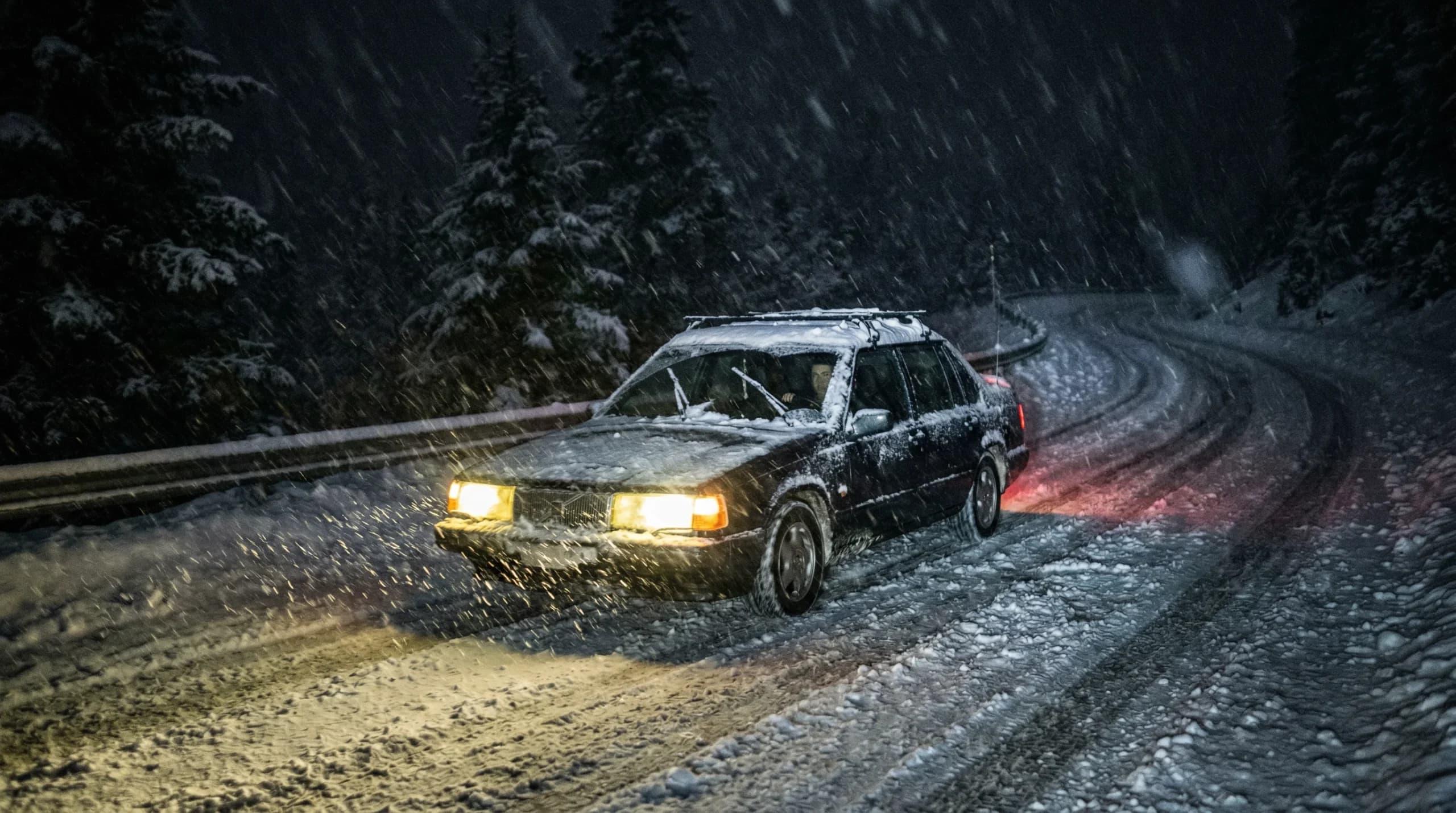
Cloudy headlights come up most often in conversations about winter night driving. That makes sense. The conditions are brutal: icy roads, total darkness, visibility that drops fast. But there is another situation that gets less attention: rain.
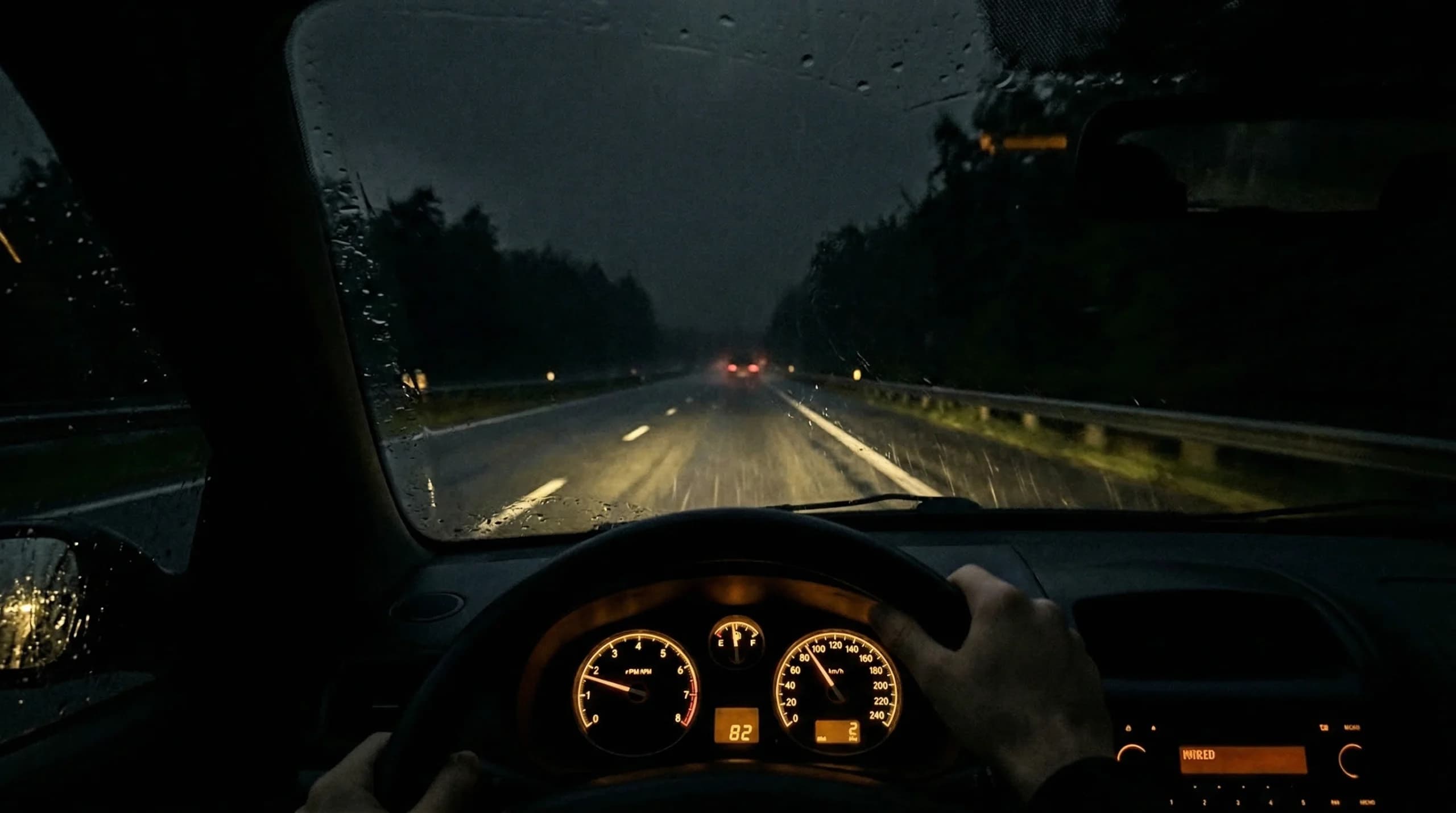
In Quebec, fall downpours come early and stick around. Between September and December, you are dealing with gray days, wet pavement, spray from trucks on Highway 20, and light levels dropping by mid-afternoon. In those conditions, damaged headlights are a real safety problem, not just a cosmetic one.
What rain does to your headlight beam
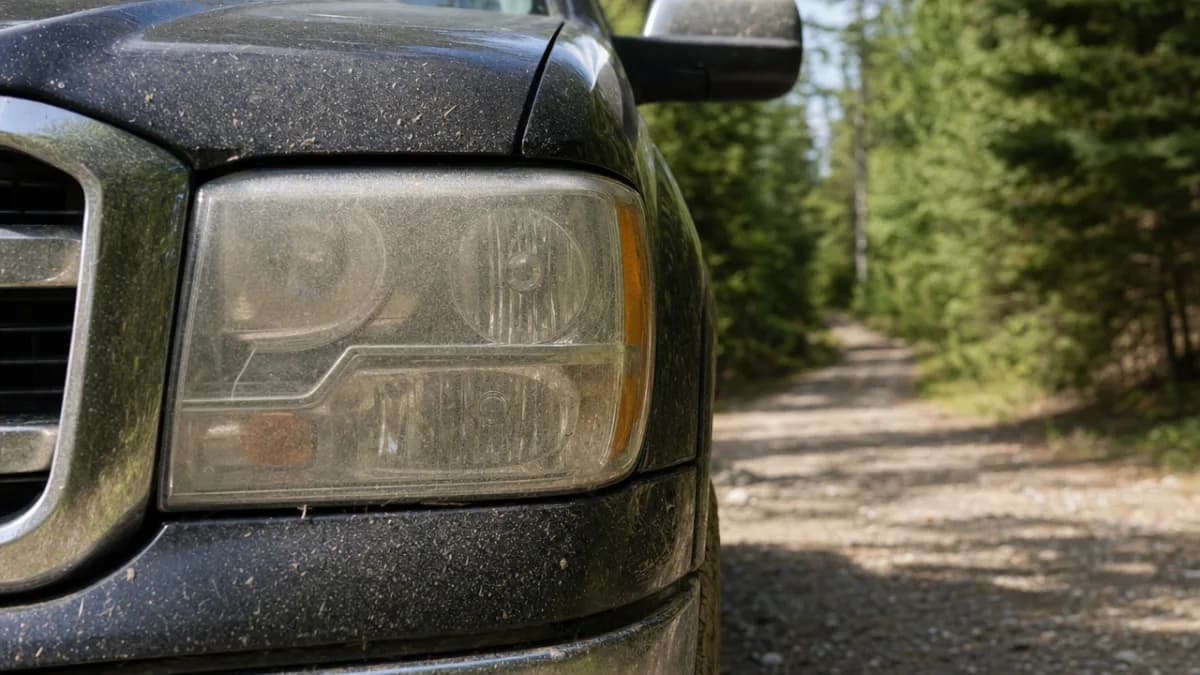
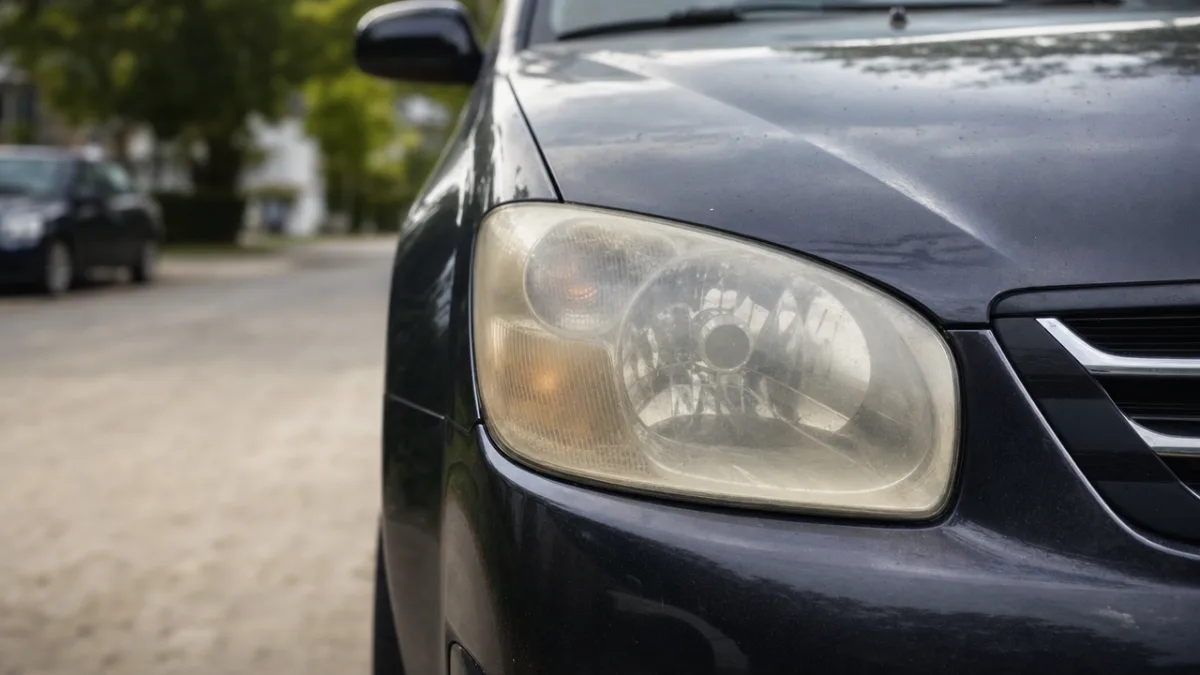
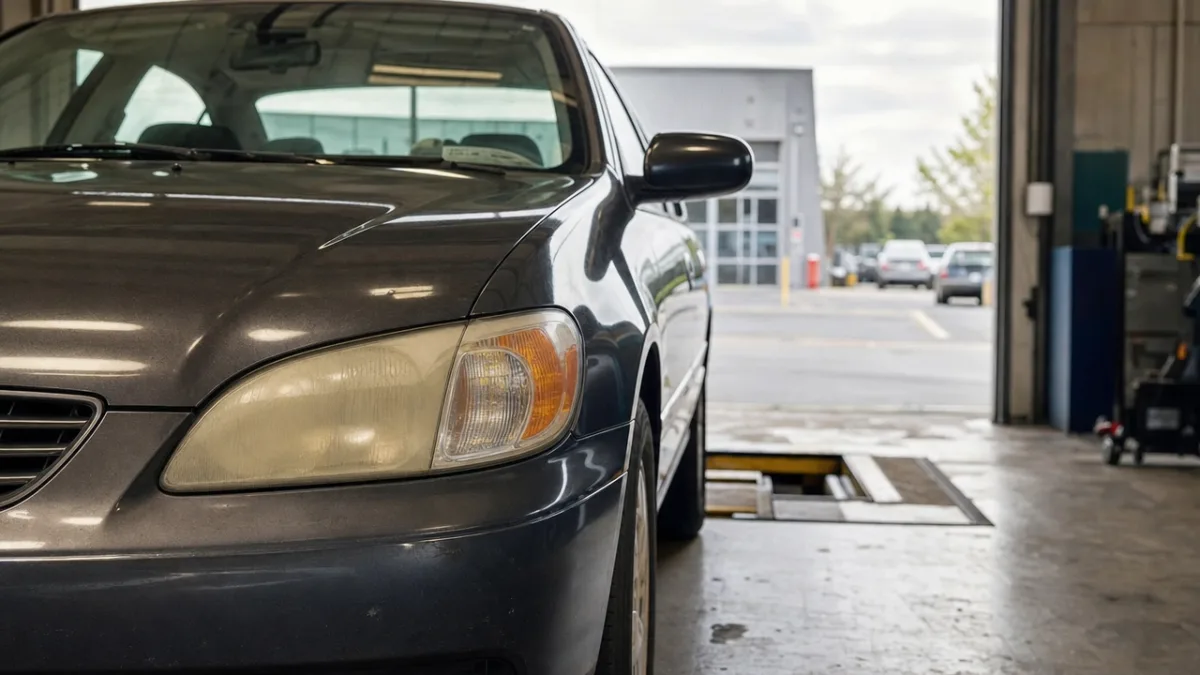
A headlight in good condition projects a sharp, well-aimed beam that reaches the road and the edges of your lane. A cloudy headlight scatters light in every direction before it even leaves the housing. The yellowed, pitted plastic acts like frosted glass: light spreads out, loses intensity, and only covers a much shorter stretch of road ahead.
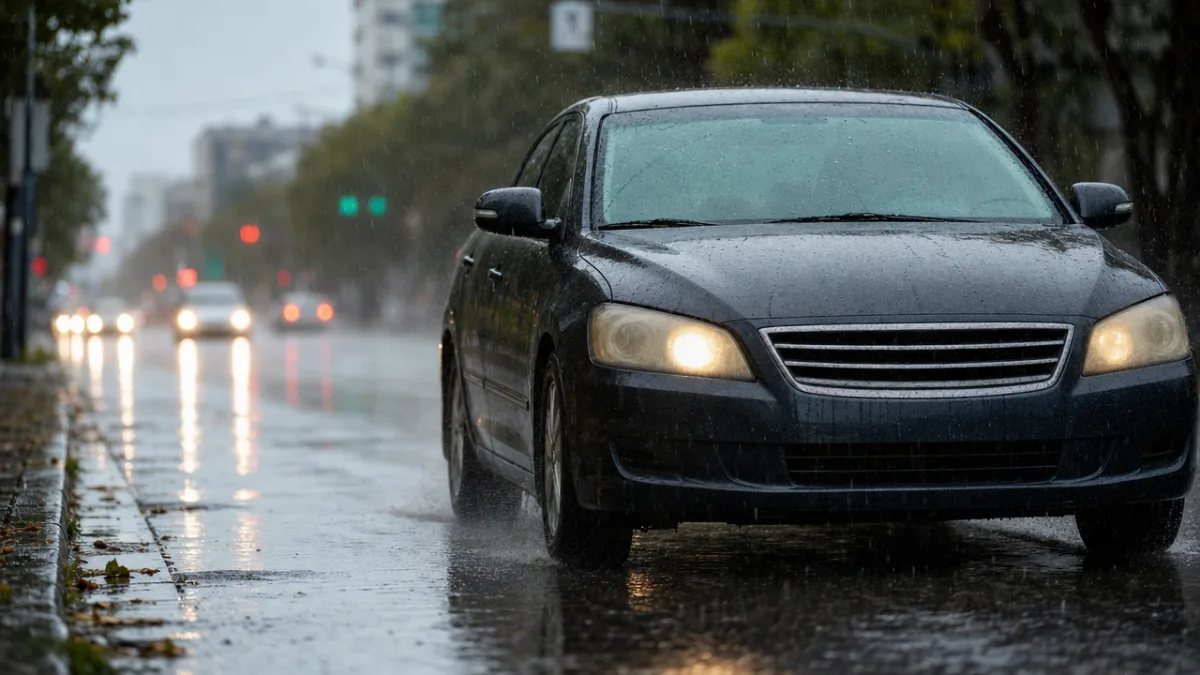
Add wet pavement to that. Water on asphalt creates reflections that muddy your view of the road. With clear headlights, those reflections are manageable because the beam is focused enough to cut through. With cloudy headlights, the beam is already weakened, and the rain reflections swallow what is left. You see less far ahead, you read road edges less clearly, and you react later.
That is not an exaggeration. If you want some actual numbers, our article on night driving with cloudy headlights lays out what this means in terms of lost lighting distance.
Freezing rain is a separate problem
Freezing rain works differently. It happens when the temperature sits right around zero, often in November or March. Ice forms on everything: the road, your windshield, your headlights.
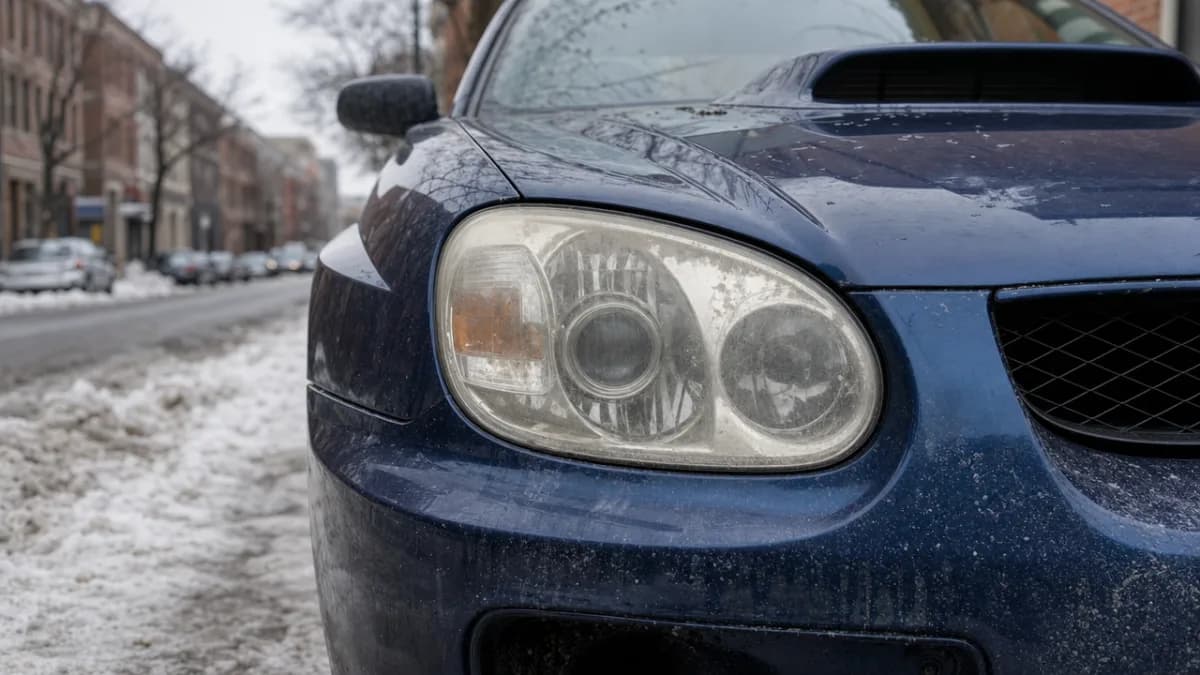
A smooth, clean headlight housing sheds water and ice reasonably well. A rough, pitted housing with a degraded surface traps moisture and builds up a thin layer of frost much faster. That frost can cut your headlight output at exactly the moment you need it most: those first few minutes after the temperature drops below zero, when black ice is forming and roads are most dangerous.
That is one reason to get your headlights restored before fall rather than waiting for deep winter. Headlight restoration before winter: the best time to do it explains why waiting until January is usually waiting too long.
Drivers who underestimate their own situation
One thing comes up often when we talk to people with damaged headlights: they have gotten used to it. The yellowing happened gradually over two or three years, and their eyes adapted. From inside the car, with the dashboard lit and city lights around you, you barely notice.
The problem is that does not reflect what everyone else sees. A pedestrian crossing, a cyclist on the shoulder, an oncoming driver: they see your headlights from outside, in the dark or in the rain. What they see is two hazy yellow glows where there should be two sharp beams.
If you are not sure whether your headlights have reached that point, 5 signs it's time to restore your headlights can help you take an honest look.
Why to act before winter, not after
A lot of drivers put off headlight maintenance because they assume it is complicated. Finding a time slot, dropping the car off, coming back to pick it up. It is easy to keep postponing.
Phares Auto Mobile is a mobile service. We come to you, at your workplace or wherever your car is parked. No half-day away from home required. The restoration takes about an hour, your car stays in your driveway or office parking lot, and you drive off with headlights that work properly.
Quebec fall, with its short days and cold rain, is a reasonable time to deal with this. Not because there is some emergency, but because you are already driving in harder conditions and that is exactly when the state of your headlights starts to matter.
Book an appointment at pharesautomobile.ca and we will take it from there.