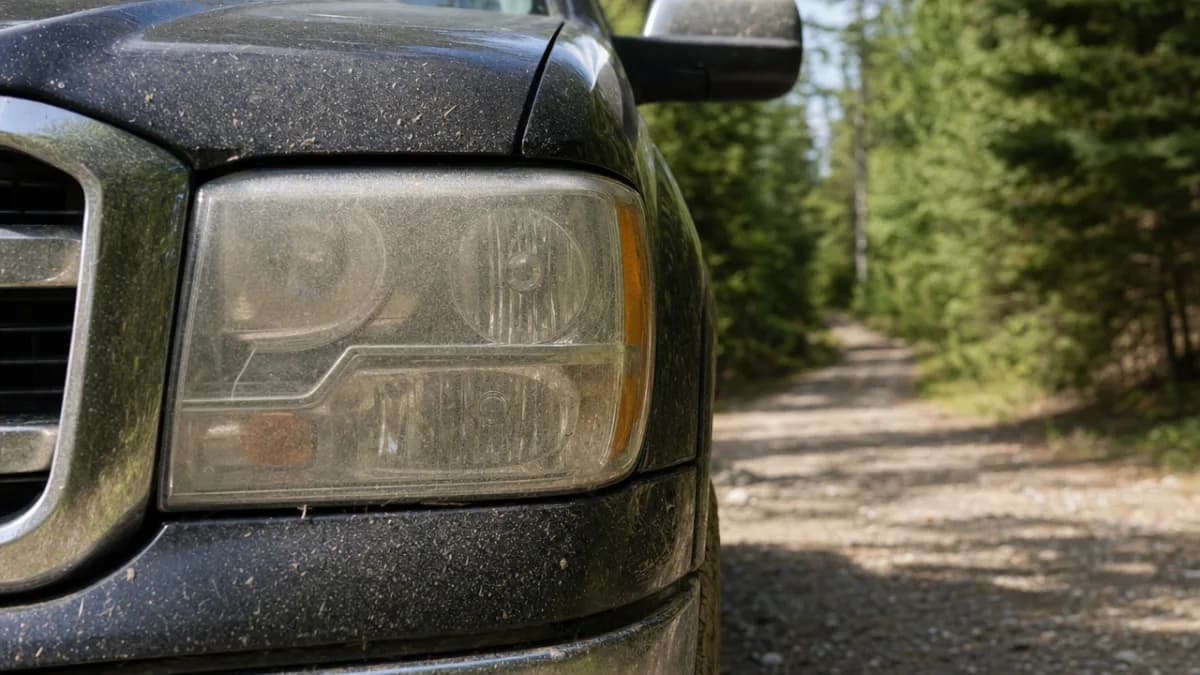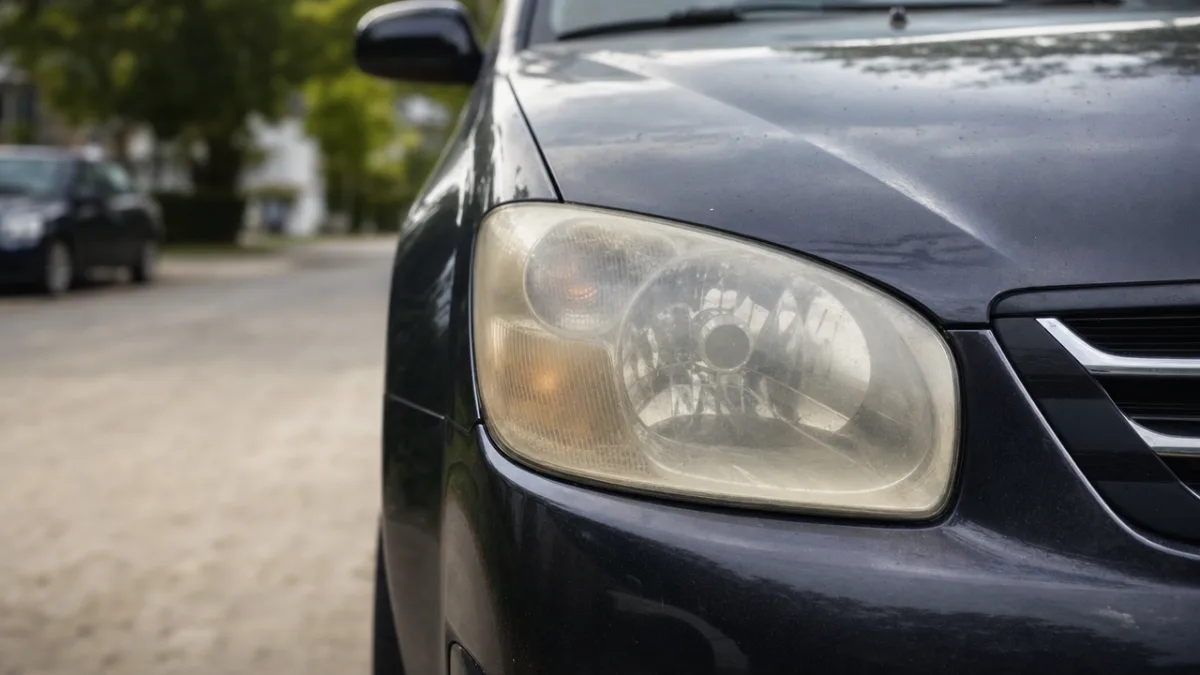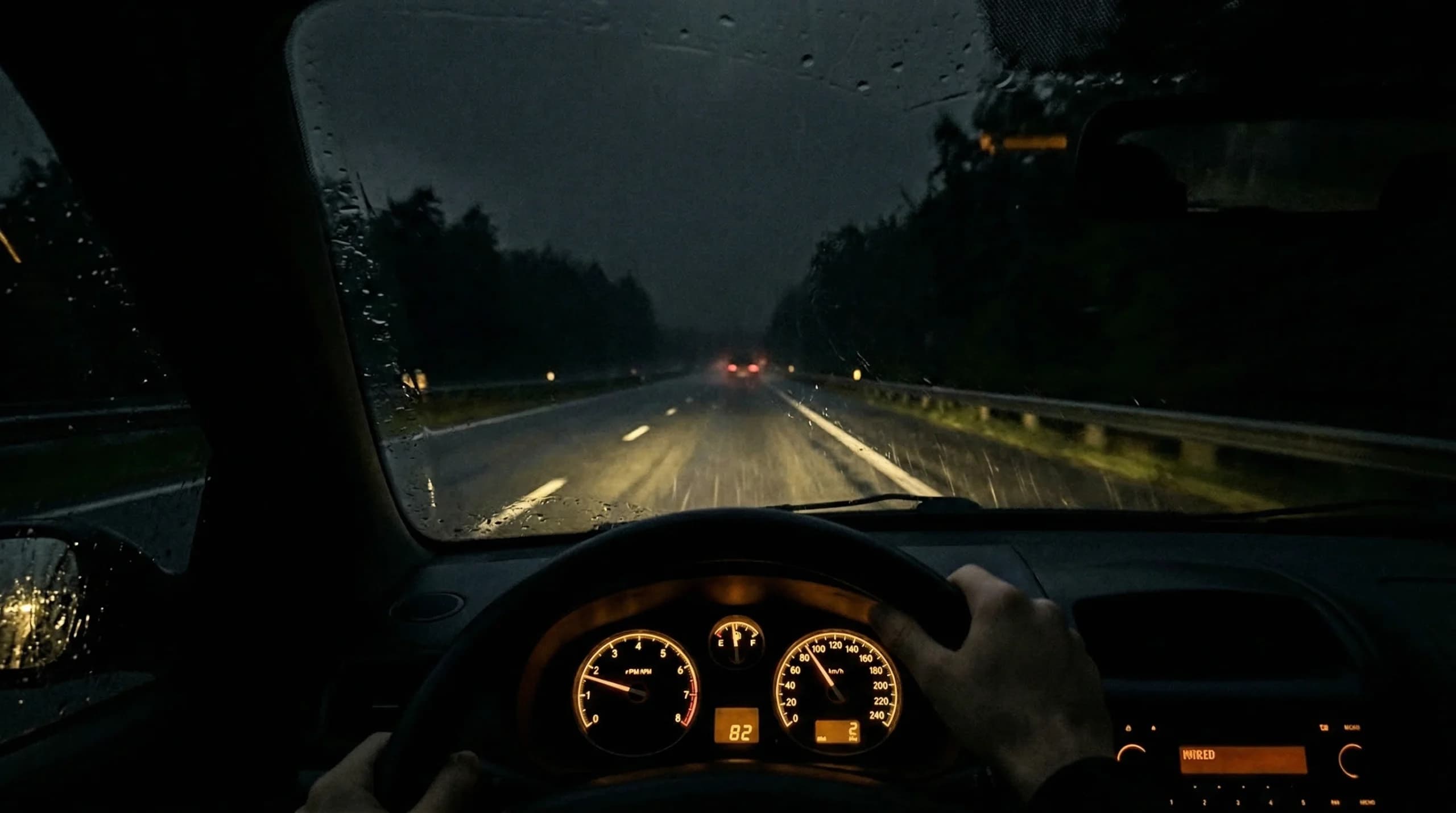
You can get used to headlights that don't shine as well. The problem is, the road doesn't adapt to that habit. At night, losing even a few meters of visibility quickly cuts into your reaction margin.
You don't need a chart to understand what's at stake. A couple of numbers will put things in perspective.
At 50 km/h, things are already moving fast
At 50 km/h, you're covering about 14 meters per second. At 90 km/h, that's roughly 25 meters per second. So a drop in how far your headlights reach immediately translates into lost reaction time.
If your headlights don't illuminate as far as they used to, even by just a car length or two, that's not a minor detail. It's less time to spot a person, an animal, a cyclist, or an obstacle.
Light isn't escaping the way it should
A cloudy headlight doesn't block everything, but it scatters light instead of directing it. The beam loses reach and precision. You see less far, and sometimes less clearly.
That's why this goes well beyond how your car looks. If you want more on this, read: Cloudy headlights and road safety: the risks you might not know about
Night already works against you
In the dark, your eyes have to work harder. Contrast drops, shapes blur, rain shows up later, and anyone in dark clothing is harder to pick out. Weakened headlights on top of that make driving more demanding, often without you noticing.
And not all damaged headlights cause the same problems. A heavily scratched headlight and one that's mainly cloudy affect visibility differently. This article explains the distinction: Scratched headlights vs cloudy headlights: they're not the same issue.
The real danger is getting used to it
What catches a lot of drivers off guard is habit. The change happens gradually. You compensate by gripping the wheel a little tighter, squinting at the road, skipping drives in the rain, without ever connecting it to your headlights.
You end up treating something abnormal as normal. Usually it's only when you see clear headlights again that you notice how far things had slipped.
A few meters can make all the difference
On a dark road, gaining or losing a few meters matters. It doesn't sound dramatic, but behind the wheel, it changes how well you can read what's ahead. When something goes wrong suddenly, it's never a good time to wish you'd taken care of it sooner.
If your headlights have lost their clarity, book an appointment at pharesautomobile.ca. You'll notice the difference on the car first, and then again once night falls.