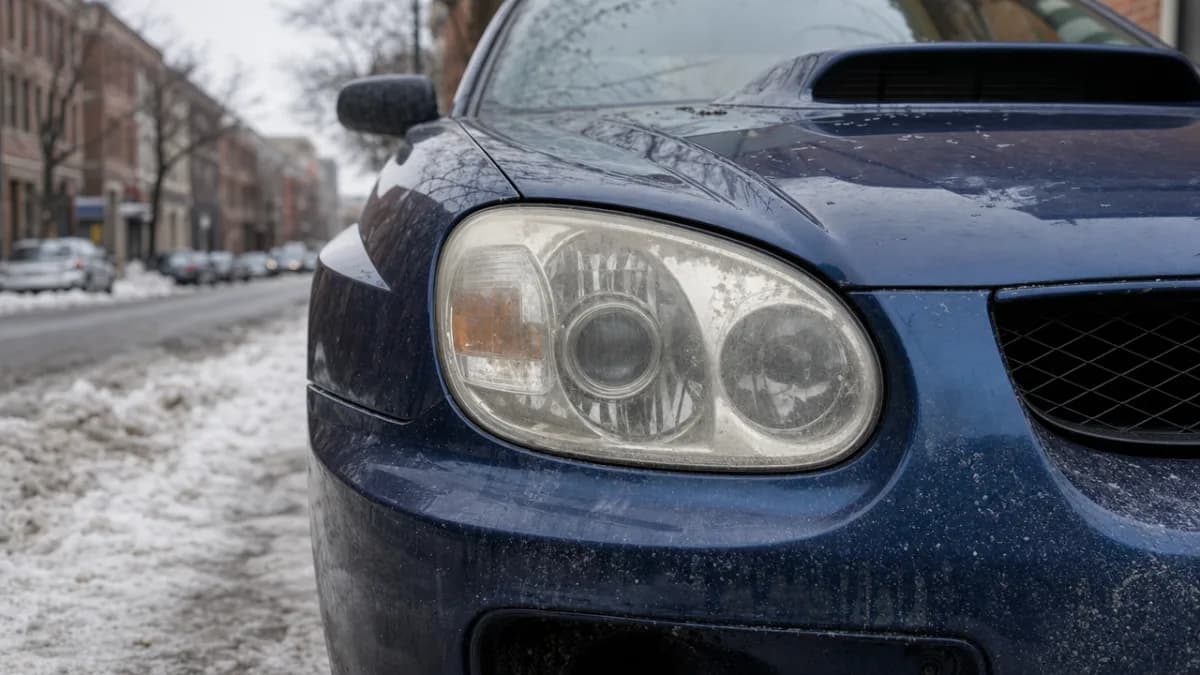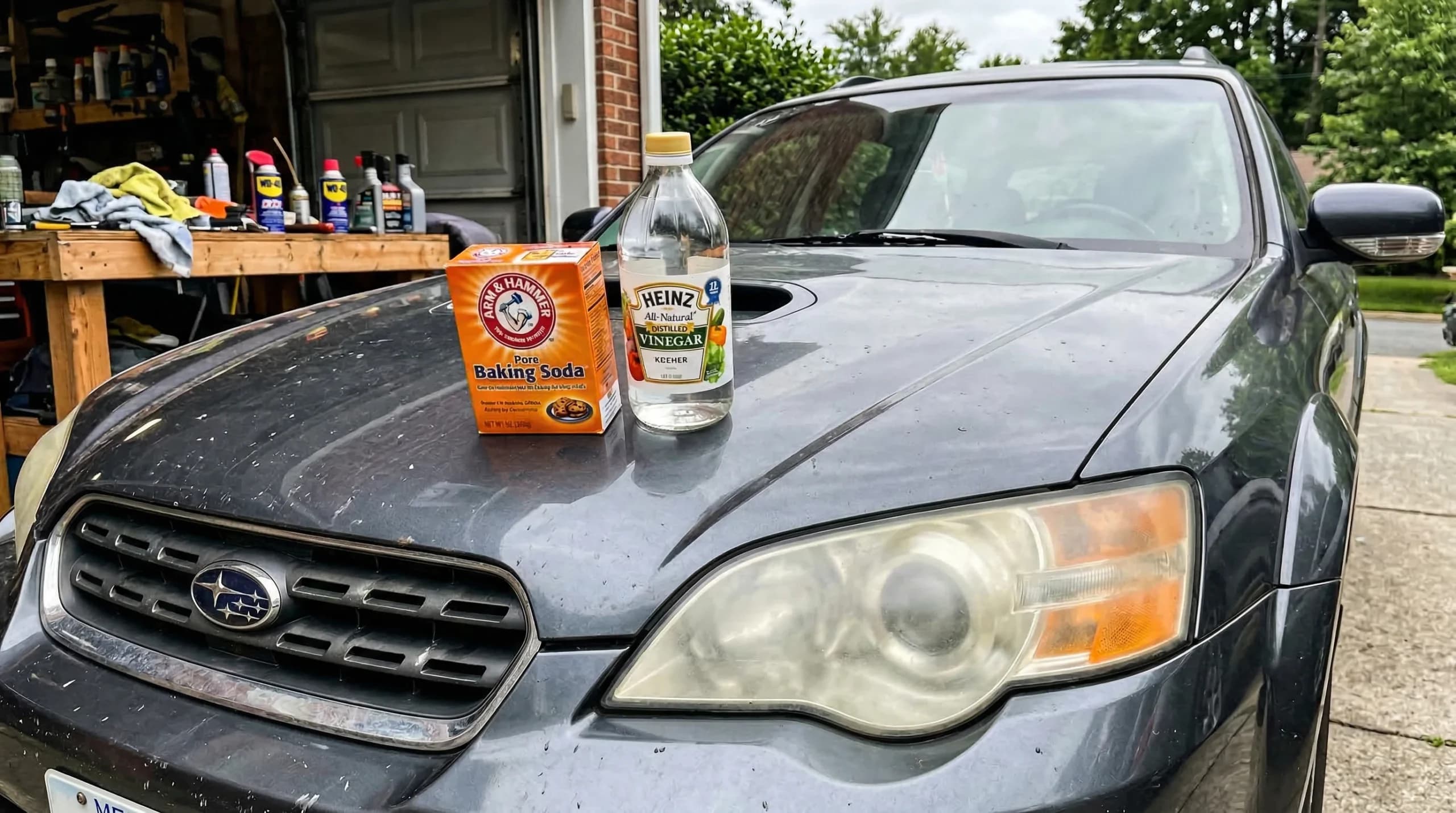
It's probably the most popular DIY fix people try on their headlights. Mix baking soda with white vinegar, apply it, scrub, rinse. Cheap and easy. But does it actually do anything?
How it works
Baking soda is a mild abrasive. Vinegar is acidic and dissolves certain deposits. Together they fizz. That reaction loosens surface dirt and takes off some of the cloudy film.
The catch: the acid and the base cancel each other out almost immediately. What actually cleans your headlights is the scrubbing action from the baking soda itself, not any special chemistry happening between the two ingredients.
What it does and what it doesn't
It clears grime, road salt, and surface residue. Your headlights will look cleaner. But it won't touch deep oxidation. The yellowing from UV exposure isn't dirt sitting on the surface. It's the plastic breaking down. No amount of scrubbing with baking soda reverses that. For real yellowing, you need sanding. We cover that in our article on the causes of headlight yellowing.
When it's worth trying
It's a reasonable option for a quick cleanup between professional restorations, or when your headlights just have road grime on them. If the problem is dirt rather than oxidation, it can help.
But if your headlights are still yellow, cloudy, or hazy after a good scrub, you're dealing with oxidation. Baking soda won't change that. Take a look at the 5 signs it's time to restore your headlights to get a better sense of where things stand.
A few things to watch out for
Baking soda is abrasive. Scrub too hard, or use a rough cloth, and you can leave micro-scratches on the lens. Always rinse thoroughly so the residue doesn't dry on the surface. And like toothpaste, it offers zero protection once you're done. The plastic is left wide open to UV rays.
For results that hold up, a professional restoration with ceramic coating is the right call. Check out our rates at pharesautomobile.ca.