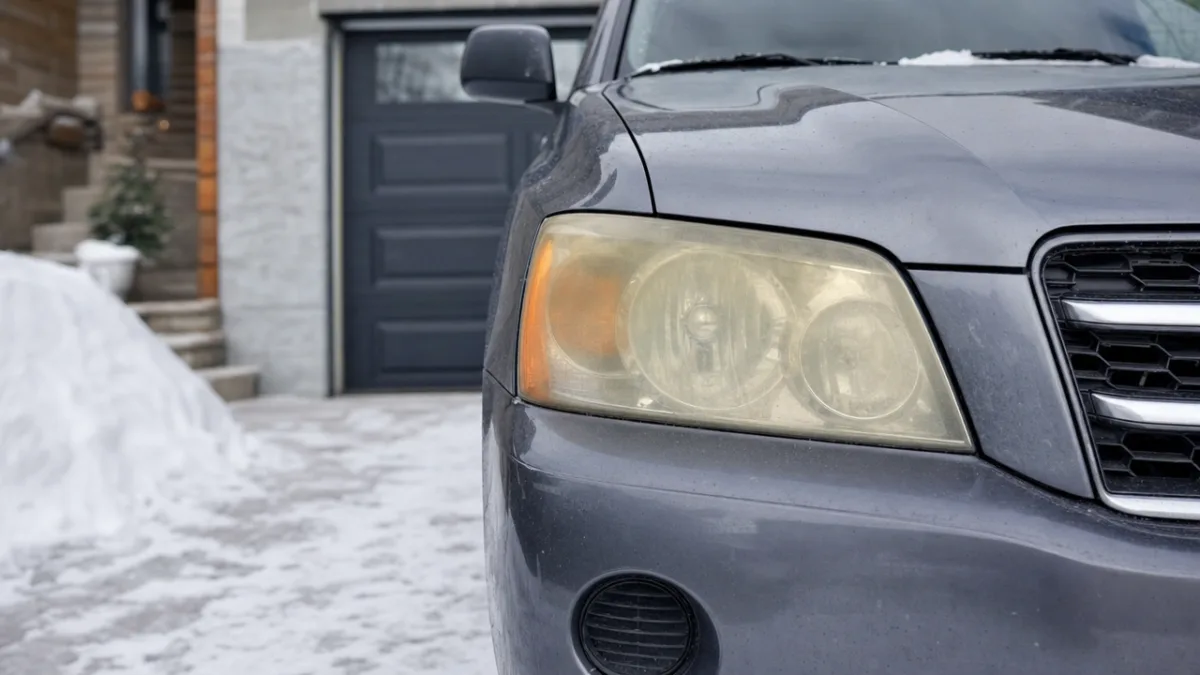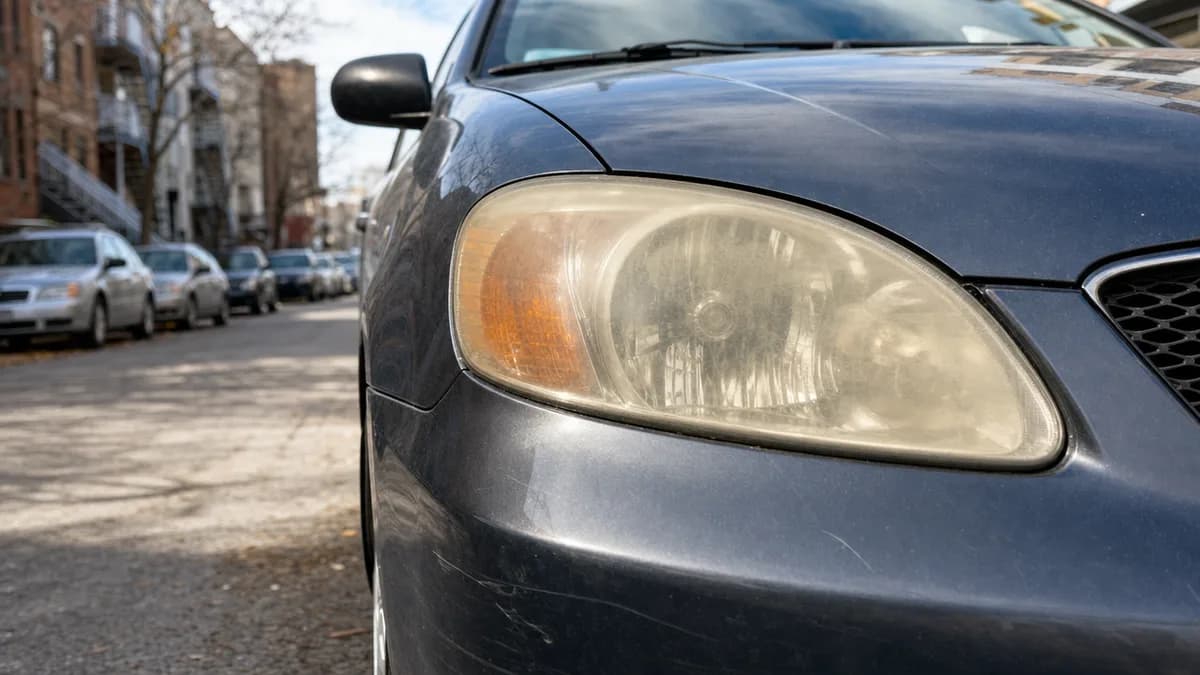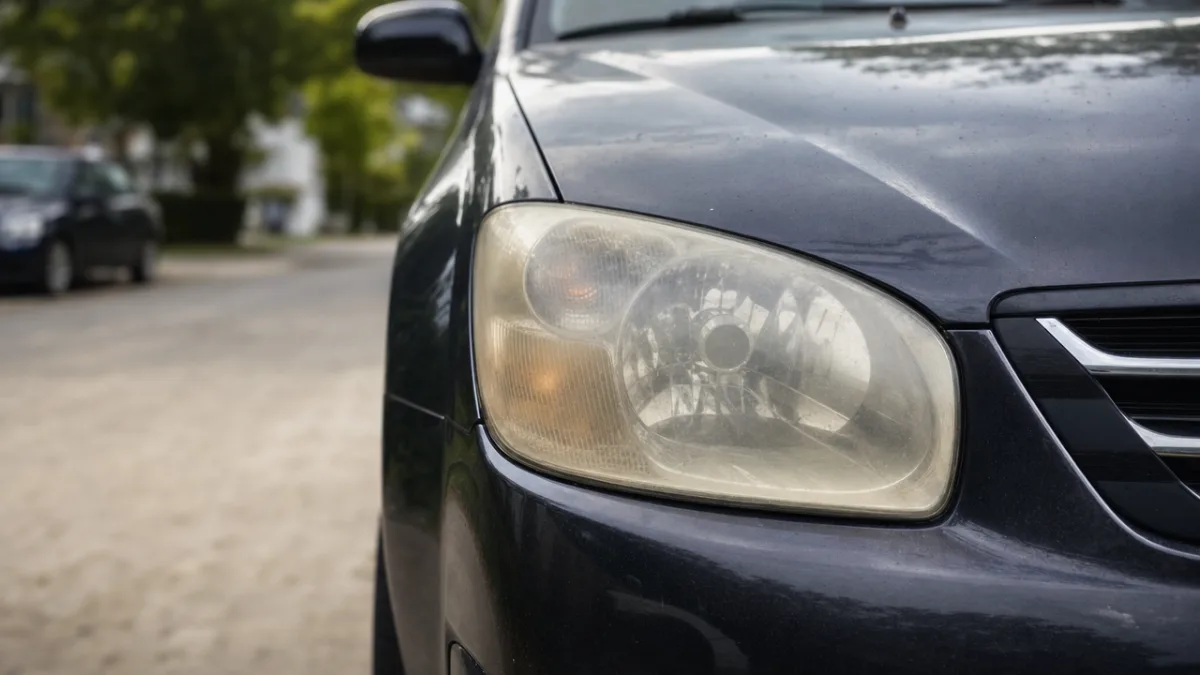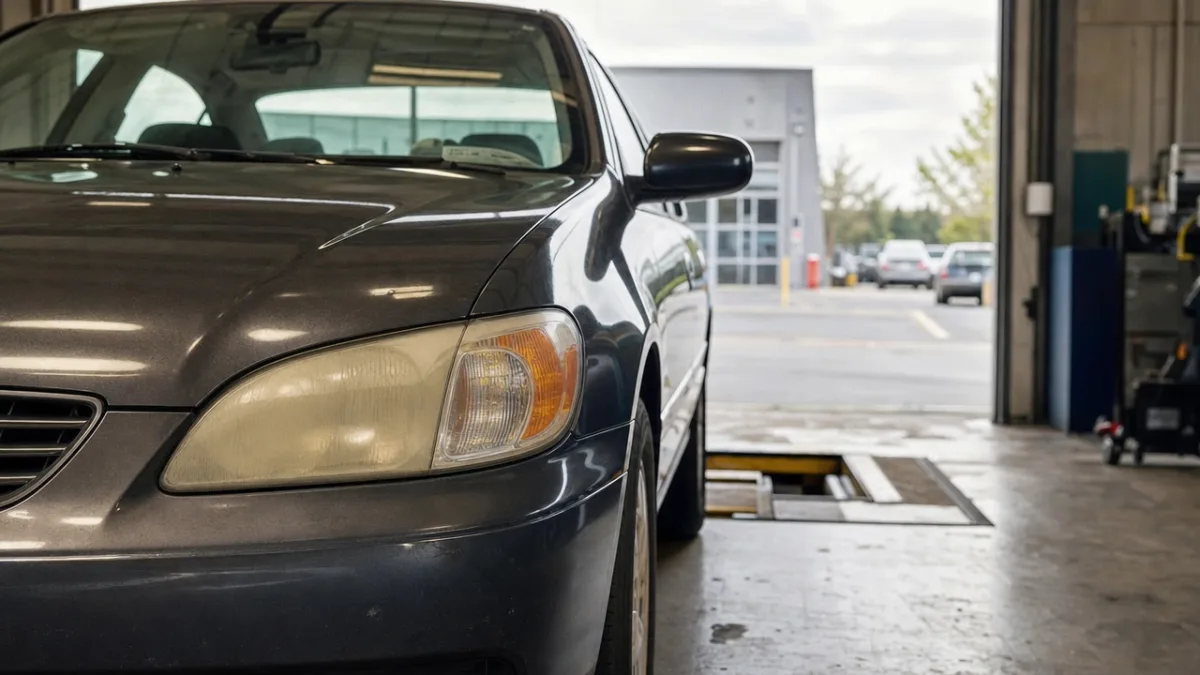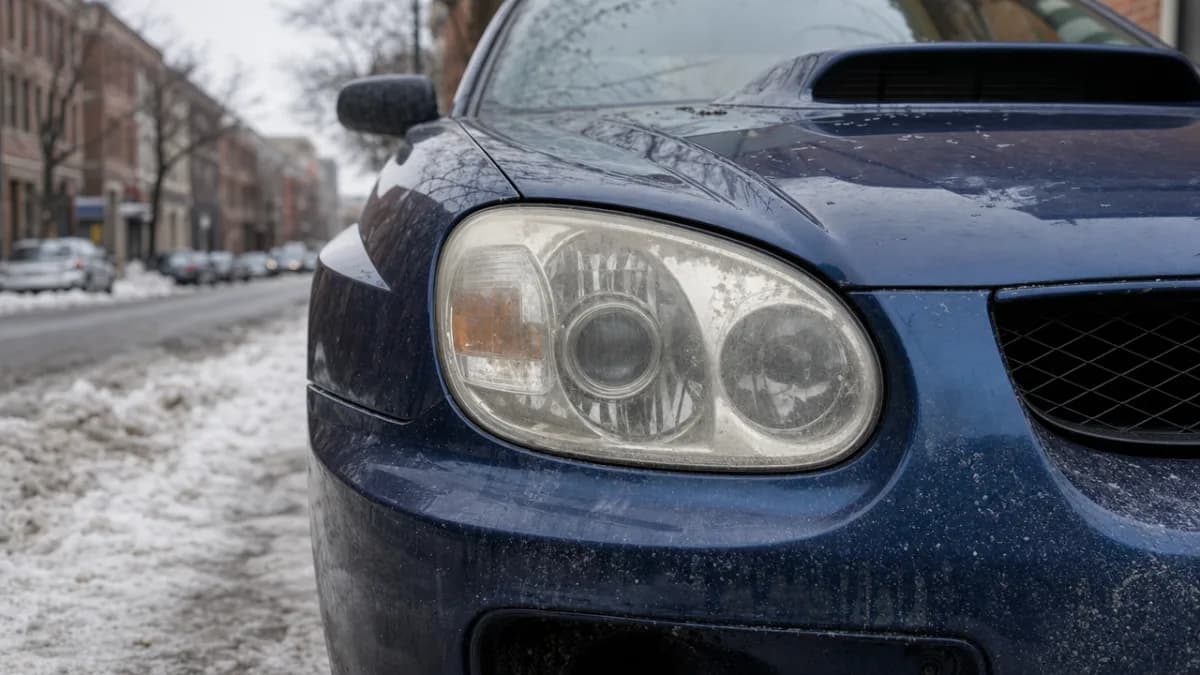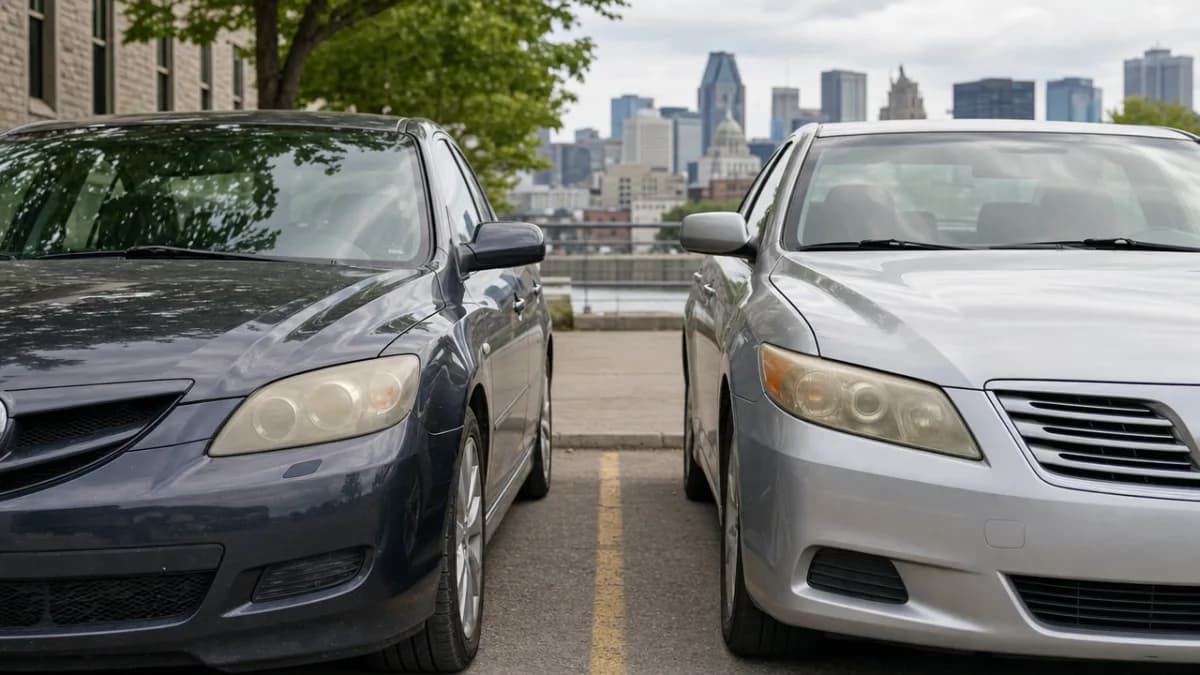
If you're driving a Mazda3 or a Toyota Camry, you're part of a pretty popular club here in Quebec. These two sedans sell well, last a long time, and have solid reputations for reliability. But when it comes to headlights, they don't age the same way. The base material, polycarbonate, is identical. The whole industry switched to plastic in the 1990s, which is why polycarbonate headlights yellow faster than glass regardless of brand. But the way that plastic is worked, treated, and positioned on the vehicle changes how fast it degrades.
Mazda3: headlights that yellow sooner than expected
The Mazda3, especially models built between 2014 and 2018, has a well-known reputation among headlight techs: the factory protective coating tends to be thinner than average. The UV layer on the polycarbonate breaks down faster, and yellowing can start as early as three or four years of use under normal Quebec conditions.
The shape of the optical assemblies is a factor too. The headlights are usually narrower and more integrated into the body. Smaller exposed surface, yes, but also less natural protection against road spray. On Highway 20 in winter, with gravel and salt flying around, these headlights pick up micro-scratches that speed up oxidation.
There's also driving style to consider. The Mazda3 tends to be driven harder, which means more hours at highway speed, more road spray, and more heat off the engine near the optics. None of these factors is a dealbreaker on its own, but they stack up.
Toyota Camry: more resistant, but not off the hook
The Camry generally has a more durable surface treatment from the factory, at least for models from the last decade. Toyota adjusted its process after the early generations of polycarbonate headlights that yellowed quickly. Camry owners typically notice the problem around five or six years, sometimes later.
That said, the Camry isn't immune. Its larger headlight surface means more area exposed to UV, acid rain, and road contaminants. Camrys that spend their days parked outside in sunny spots, office parking lots, open-air terraces, can degrade faster than you'd expect despite the better coating.
Parking outside versus in a garage has a real impact on your headlights, and that applies to a Camry just as much as any other car.
What this means for maintenance
If you've got a Mazda3, start inspecting your headlights seriously around year four or five. No need to panic, but the first sign of haze or a slight yellow tint is worth acting on. Getting ahead of it is simpler and cheaper than waiting until the plastic is deeply oxidized.
With the Camry, you can usually wait a bit longer, but a yearly inspection is still a good habit. The larger surface means that when it does yellow, it's more visible, and the impact on lighting clarity is proportional to the affected area.
In both cases, after professional restoration, a good protective coating makes a real difference in how long the results hold. Our breakdown on wax, sealant, and ceramic coatings to protect your headlights can help you pick the option that fits your budget and driving habits.
Restoration: both models respond well
Good news for Mazda3 and Camry owners: both respond well to professional restoration, even after years of degradation. The polycarbonate stays solid enough to handle progressive sanding and a quality UV sealant finish.
The practical difference between the two is that a Mazda3 covered in micro-scratches may need slightly more aggressive sanding to clear all the imperfections. But the end result is comparable. Both can get back to clarity that's close to new, and that's what matters.
If you're wondering whether it's worth having someone come to you rather than going to a shop, a mobile service can handle your Mazda3 or Camry while you're at work or at home, no trip required.
If your headlights are starting to change and you want to know what to expect, book an appointment on pharesautomobile.ca and we'll take care of everything, wherever you are in Montreal or the suburbs.